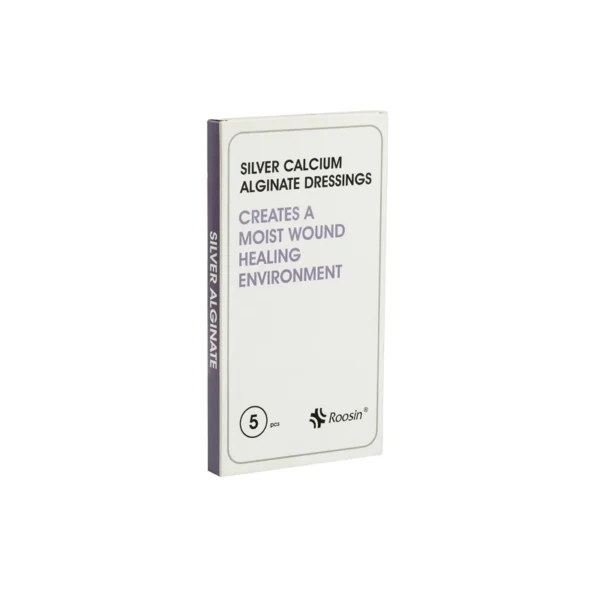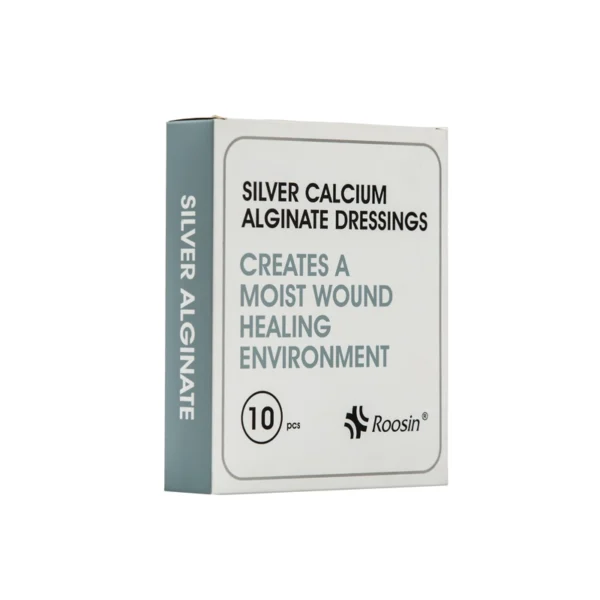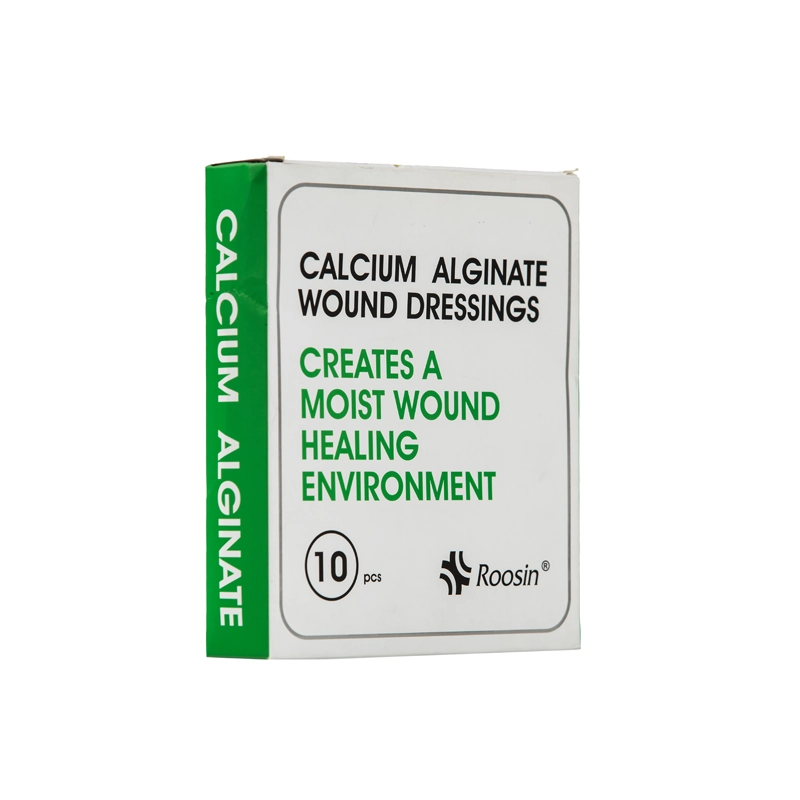
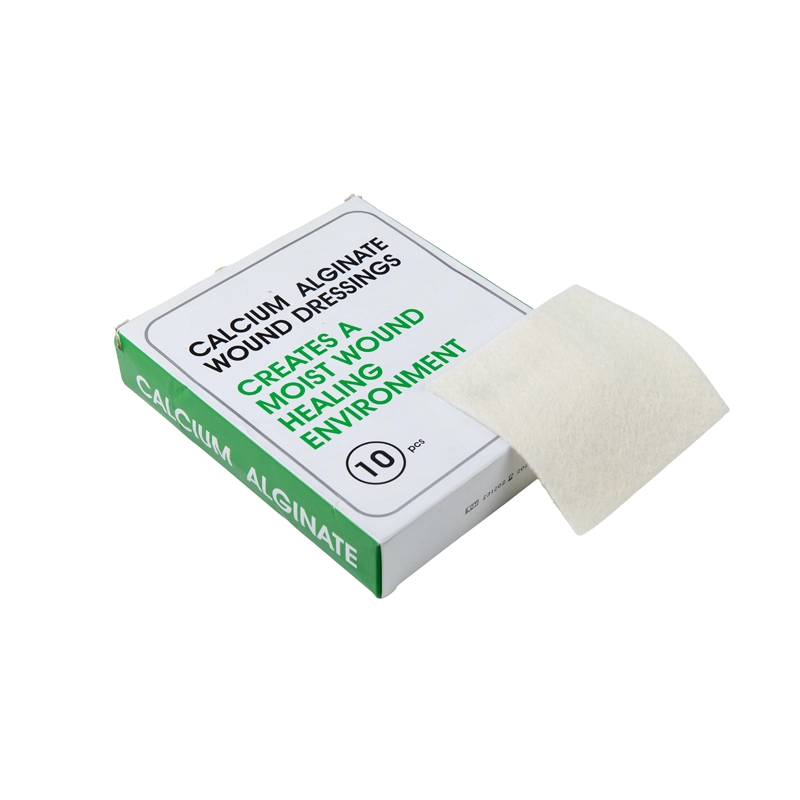

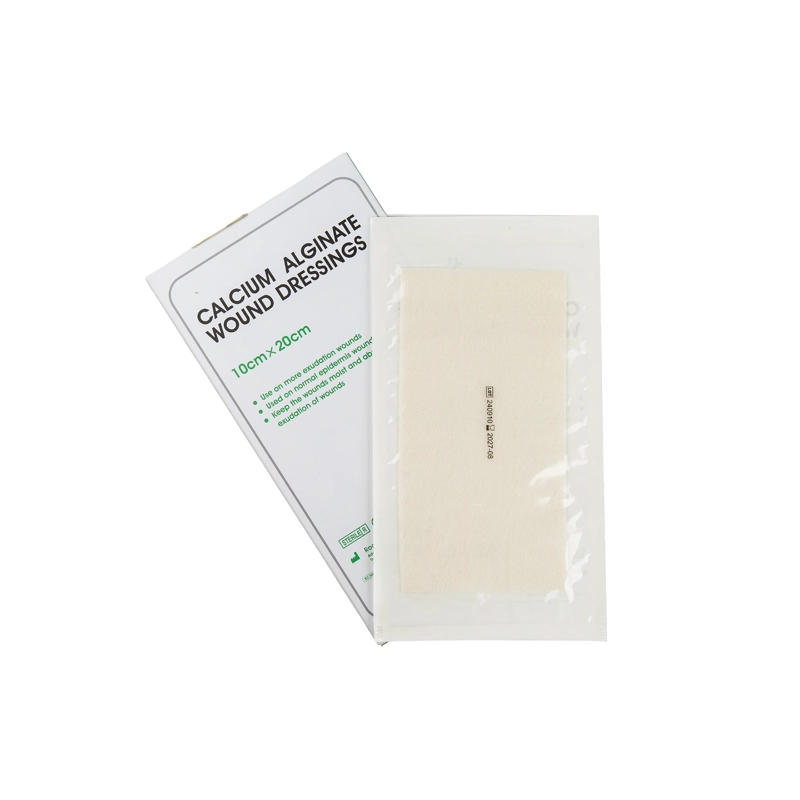
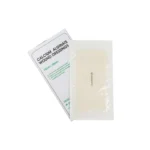
Plain Calcium Alginate Dressing
Calcium Alginate DressingThe calcium alginate dressing is made of mannuronic and guluronic acids. Based on an ion exchange mechanism, calcium ions are exchanged with sodium ions in the wound environment and its fluids, forming a hydrogel as the dressing absorbs exudate from the wound.
By absorbing exudate, it removes the need for frequent dressing changes.
This dressing is used to absorb and retain exudate in wounds with high and moderate exudate.
This dressing remains effective even when the wound extends from the epidermis into the dermis.
By absorbing the wound’s natural exudate and forming a gel while managing moisture, it controls and accelerates the healing process.
The calcium alginate dressing is highly flexible and can be shaped into different geometric forms, allowing it to fill the area being treated.


| Country of Manufacture | China |
| Dressing Form | Sheet |
| Components | Calcium alginate Sodium alginate |
| Main Feature | Keeps the wound moist, easy removal from the wound, absorbs wound exudate |
| Suitable for Diabetic Wounds | Yes |
| Uses | Diabetic foot ulcers, cavity wounds, contaminated and infected wounds, wound hemostasis (blood clotting), pressure ulcers and bedsores, burns up to second degree, wounds with moderate to heavy exudate |
| Contraindications | Third-degree burns, wounds with severe bleeding, dry wounds or wounds with minimal exudate, allergy or sensitivity to dressing materials |
| Duration of Use | Change daily |
| Antibacterial | No |
| Can Be Cut | Yes |
| Certifications | FDA-CE-ISO |
The most important uses of the calcium alginate dressing, which can greatly help the healing of the following wounds, are:
Leg ulcers (LEG ULCER)
Pressure ulcers (PRESSURE ULCER)
Diabetic foot ulcers and other wounds in diabetic patients (DIABETIC FOOT ULCER)
Surgical wounds and injuries (Surgical Wounds)
Lacerations and tears (LACERATION)
Severe abrasions (ABRASION)
Venous and varicose ulcers (VENOUS ULCER)
Arterial ulcers (Arterial Ulcer)
Cavity wounds (cavity wound)
Post-operative surgical wounds (post-operative surgical wounds)
First, the wound must be fully cleansed and infectious colonies removed; then the skin around the wound is dried so the dressing can be chosen based on the wound’s size and shape. The dressing is secured on the wound with a transparent film or sterile gauze. Medications are sometimes used for antibacterial effect, and the dressing must not interact with them.