IV Three-Way Stopcock
Today, advances in medical science have led specialists to focus more on medical equipment manufacturing and use advanced technologies to bring new medical equipment to market. This in turn has a significant effect on the treatment process and on speeding it up.
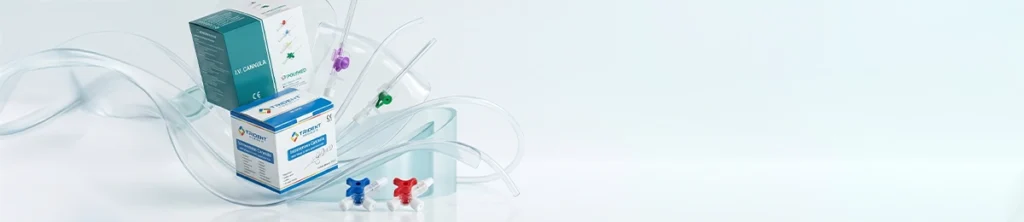
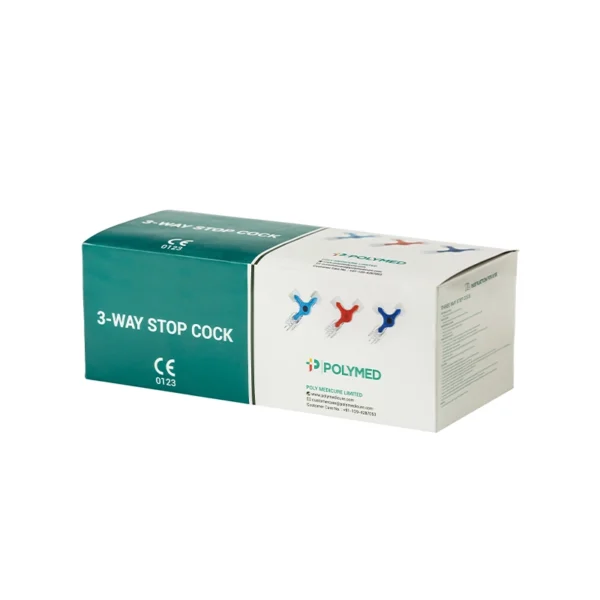
One widely used medical device is the IV three-way stopcock, which is valve-shaped and used to control the flow of a fluid, infusion or medication. It provides three different flow paths (inlet to outlet, inlet to side port and side port to outlet), controlled by the handle on top of the device.
IV three-way stopcocks have three ports (two female Luer Lock ports and one male Luer Lock port) and three caps for them. There is also a valve on top that can rotate 360 degrees. The body is transparent and made of polycarbonate.
Types of IV Three-Way Stopcocks by Color
The valve on top comes in three colors, red, blue and white, which is a form of color coding. The blue type is for intravenous infusions and the red type for arterial lines. The white type is rarely used and is usually for patients who need large volumes of IV fluids. The white type is also used in cases that are not emergencies but must be done as soon as possible, such as blood transfusions
Features of the IV Three-Way Stopcock
This medical device has several features, the most important being:
Provides a steady flow of fluid without any disruption
Leak-proof body that withstands more than 10 bar under normal conditions
Arrow markings on the valve showing the direction of flow
The valve can rotate 360 degrees without restriction
Several fluids can be infused into the person at the same time
Can be used for children and adults
Change every 72 hours
Sterile and single-use
Difference Between Three-Way and Four-Way IV Stopcocks
Four-way IV stopcocks can rotate 360 degrees and, as shown in the figure below, have settings for each of the four available positions. Three-way stopcocks, by contrast, have only three positions, all shown in the figure below.
In the first position, fluid flows between points A and B.
In the second position, fluid flows between points A and C.
In the third position, fluid flows between points B and C.
In the fourth position, which exists only in four-way stopcocks, fluid flows between all three points.
How to Use an IV Three-Way Stopcock
To use an IV three-way stopcock, it is best to follow these steps:
First, check the packaging for damage and the expiry date, then open it. Use the stopcock immediately after opening.
Remove the caps from the ends of the ports.
Depending on your needs, connect one of the ports to an extension tube or other device.
Remove any air in the stopcock or the connected tubes.
Clean the connection site and connect it to the patient.
Precautions When Using an IV Three-Way Stopcock
Use only once.
Do not use if contaminated, dirty or damaged.
Using it more than once for other patients may cause infection.
When in use, make sure the port is connected. Check regularly that no fluid is leaking at the connection.
Advantages of Using an IV Three-Way Stopcock
The IV cannula lasts longer because no pressure is needed on the patient’s vein
Lower risk of contamination when connecting and disconnecting the microset
The infusion set is not contaminated because it does not need to be moved
Less contamination and vein damage in children
Lower risk of embolism
Complications of Using an IV Three-Way Stopcock
Because of the stopcock’s design, a “dead space” forms at the connection between the stopcock and other devices. Even with flushing, this space cannot be completely cleared of residual fluids, which leads to contamination building up in this area. While the catheter remains in the blood vessel, this buildup leads to bacteria accumulating. Frequent handling of the stopcock also increases contamination and, as a result, hospital-acquired infections.
****
Types of IV Cannulas by Color
IV cannulas are divided into several types by color. Each IV cannula color has a specific size, and which one to use depends on several factors.
Orange IV cannula
The orange IV cannula is size or gauge 14. Its fluid flow rate is therefore higher than other types, allowing up to 240 ml of fluid per minute. It has an average length of 45 mm.
One of the most important uses of the orange IV cannula is blood transfusion. (Because blood is a suspension containing particles and solutes, large-diameter cannulas must be used for transfusion.) This consumable is also used for patients with major injuries and major surgery; in general, this cannula is used in emergencies.
Size 14G
Color: orange
Length: 45 mm
Flow rate: 240 ml
Rapid fluid replacement
Blood transfusion
Trauma and major surgery
Size 16G
Color: gray
Length: 45 mm
Flow rate: 180 ml
Rapid fluid replacement
Blood transfusion
Trauma and major surgery
Gray IV cannula
As mentioned, each IV cannula has a specific size. The gray IV cannula is size 16. It has an average length of 45 mm and a flow rate of 180 ml per minute. This cannula is also used for rapid fluid delivery, blood transfusion, and major injuries and surgery.
White IV cannula
The white IV cannula is size 17 with a flow rate of 130 ml per minute. Like the previous types, the white cannula is suitable for delivering fluids quickly, and it is also a good option for transfusing blood and blood products, major injuries and major surgery.
Size 17G
Color: white
Length: 45 mm
Flow rate: 130 ml
Rapid fluid replacement
Blood transfusion
Trauma and major surgery
Size 17G
Color: white
Length: 45 mm
Flow rate: 130 ml
Rapid fluid replacement
Blood transfusion
Trauma and major surgery
Green IV cannula
The green IV cannula is size 18, and its flow rate drops to 90 ml per minute; fluids flow more slowly than with the previous cannulas, and it is used for blood transfusion and surgery. It is also used when IV nutrition is needed or for stem cell harvesting.
Pink IV cannula
It has gauge number 20. Fluids are delivered at a slower, more controlled rate of 60 ml per minute. It is 32 mm long and is suitable for most IV fluid and drug delivery. It is also used to inject many anesthetic drugs.
Size 17G
Color: white
Length: 45 mm
Flow rate: 130 ml
Rapid fluid replacement
Blood transfusion
Trauma and major surgery
Size 22G
Color: blue
Length: 25 mm
Flow rate: 36 ml
Fluid and drug delivery to the elderly
Drug delivery to cancer patients
Blue IV cannula
This IV cannula is size 22 and 25 mm long. What you should know about this cannula is that its flow rate is slow, at 36 ml per minute. One of its important uses is delivering medications and IV fluids to children, and it is also used for drug delivery in the elderly and patients with cancer.
Yellow IV cannula
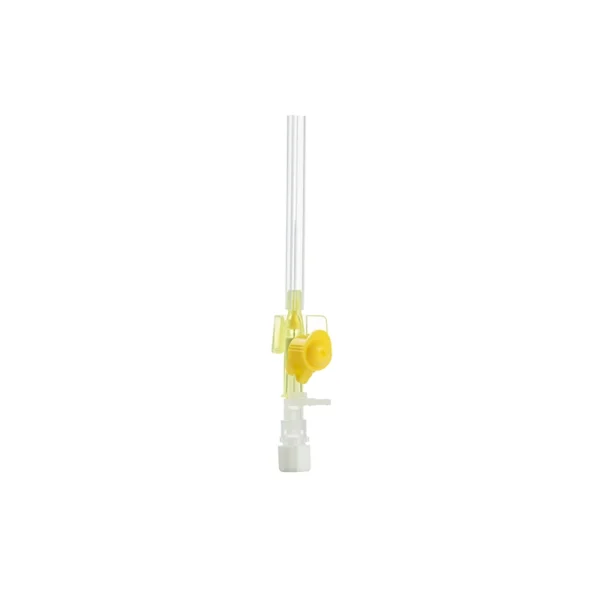
Another IV cannula is yellow and 19 mm long. Interestingly, its flow rate for drugs and IV fluids is 20 ml per minute, and one of its important uses is for infants and children.
Size 24G
Color: yellow
Length: 19 mm
Flow rate: 20 ml
Suitable for infants and children
Size 26G
Color: violet
Length: 0.6 × 19 mm
Flow rate per minute: 15 ml
Suitable for newborns and other infants
and children up to 4 years old
Violet IV cannula
This IV cannula is size 26 and its length is 0.6 × 19 mm. What you should know about this cannula is that its flow rate is 15 ml per minute. Its important uses are for newborns, other infants and children up to 4 years old.
The IV Cannula and Its Components
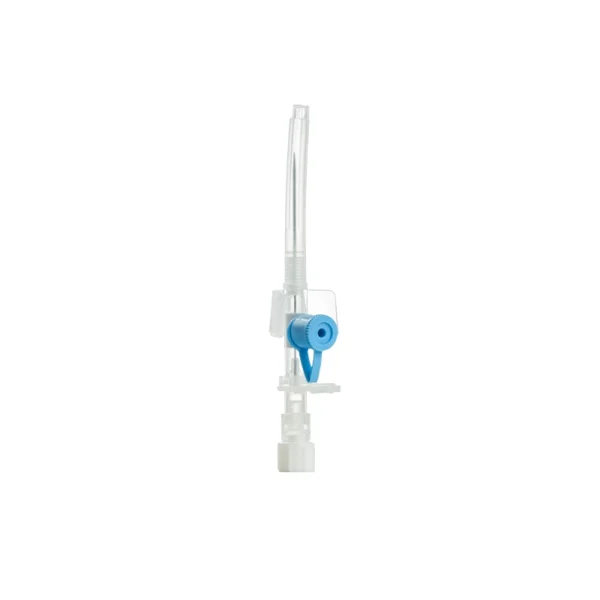
An IV cannula is essentially a thin, hollow plastic tube. This widely used medical device is made up of several parts, each with a specific role. The figure below shows the components of the different types of IV cannulas.
The Importance of Choosing the Right IV Cannula
As we mentioned earlier, IV cannulas come in various sizes, each suited to a specific age group with its own function. Care must therefore be taken when choosing this device to avoid possible complications, such as pain.
Choosing the right IV cannula depends on several factors, three of which are listed below:
Vein thickness
Vein thickness is one of the important factors in choosing an IV cannula. In general, if the patient has thin, fragile, delicate veins, a pink IV cannula should be used. On the other hand, for many adults whose veins are thicker than those of adolescents and children, sizes 14 and 22 are recommended.
The importance of vein size in choosing an IV cannula
The importance of patient age in choosing an IV cannula
Patient age
Consider the patient’s age. Choosing the wrong IV cannula can cause problems. For example, using a thick cannula such as the gray or orange model, or even pink or blue, for children and infants may rupture their veins during infusion.
Type of infused substance
The type of infused substance is another factor in choosing the type of IV cannula. Typically, thicker cannulas are used to deliver steroid and crystalloid solutions so they can be delivered into the body with moderate pressure.
The IV Cannula and How to Use It
One question you may have is how the different types of IV cannulas are used. The answer is simple! The needle part of the cannula passes through the skin with a bevel cut, enters the vein, and fluids are delivered.
One capability the IV cannula gives users is being able to see blood in the vein. This happens as the catheter slides over the top of the needle, producing a flashback signal, after which blood can be drawn from the body or fluids can be delivered into the vein.
Signs of a Problem with the IV Cannula
Sometimes while using an IV cannula you may notice signs such as redness and swelling, burning and blistering, bleeding, or blood collecting in or around the skin. These signs indicate a problem with the intravenous cannula, and you should raise it with the doctor as soon as possible.
What Role Does Size Play in Choosing and Using an IV Cannula?
IV cannula size is a key factor in choosing this device. It is so important that choosing the wrong size can cause complications such as vein rupture, pain, infection, skin swelling and problems delivering fluids into the vein.
How do pediatric and adult IV cannulas differ?
Children usually get IV cannulas that are thinner (smaller diameter, higher gauge number) than those for adults. This is because children’s veins are thin, delicate and fragile, and using a larger-diameter cannula increases the risk of the vein rupturing.
Brands and Prices of IV Cannulas
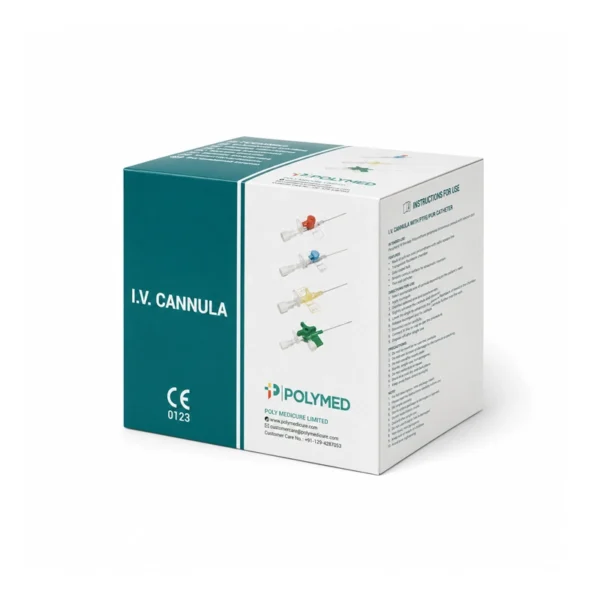
Now, with the information in this article, you can go ahead and buy an IV cannula. This medical device is sold by pharmacies and various companies such as Bonyan Tajar. Our company sources and supplies its products from reputable brands such as PolyMed. Differences between PolyMed IV cannulas and others include:
A tapered catheter that is kink-resistant and radiopaque
Flexible wings for easy and secure fixation of the cannula in place
Biocompatible materials that increase the cannula’s dwell time
A clear flashback chamber for easy inspection and to prevent backflow of blood and fluids
A round grip on the needle hub for better support during insertion
An injection port with a silicone valve, suitable for intermittent therapy
Given the variety of IV cannula models and exchange rate fluctuations, we recommend contacting our experts before buying this product to find out the price of IV cannulas.
The IV Cannula and Its Important Role in IV Therapy
In this article, we have tried to fully explain everything you need to know about IV cannulas. As we said, IV cannulas come in various sizes; smaller-diameter ones are usually used for young people and thicker ones for adults. We also noted that buying an intravenous cannula requires attention to factors such as the patient’s age, the type of fluid infused and the vein thickness.
Finally, if you still have questions about the types of IV cannulas or other topics in this article, you can contact us through the comments section.
IV cannulas are divided into several types by color. Each IV cannula color has a specific size, and which one to use depends on several factors.
The orange IV cannula is size or gauge 14. Its fluid flow rate is therefore higher than other types, allowing up to 240 ml of fluid per minute. It has an average length of 45 mm.
One of the most important uses of the orange IV cannula is blood transfusion. (Because blood is a suspension containing particles and solutes, large-diameter cannulas must be used for transfusion.) This consumable is also used for patients with major injuries and major surgery; in general, this cannula is used in emergencies.
As mentioned, each IV cannula has a specific size. The gray IV cannula is size 16. It has an average length of 45 mm and a flow rate of 180 ml per minute. This cannula is also used for rapid fluid delivery, blood transfusion, and major injuries and surgery.
The white IV cannula is size 17 with a flow rate of 130 ml per minute. Like the previous types, the white cannula is suitable for delivering fluids quickly, and it is also a good option for transfusing blood and blood products, major injuries and major surgery.
The green IV cannula is size 18, and its flow rate drops to 90 ml per minute; fluids flow more slowly than with the previous cannulas, and it is used for blood transfusion and surgery. It is also used when IV nutrition is needed or for stem cell harvesting.
It has gauge number 20. Fluids are delivered at a slower, more controlled rate of 60 ml per minute. It is 32 mm long and is suitable for most IV fluid and drug delivery. It is also used to inject many anesthetic drugs.
This IV cannula is size 22 and 25 mm long. What you should know about this cannula is that its flow rate is slow, at 36 ml per minute. One of its important uses is delivering medications and IV fluids to children, and it is also used for drug delivery in the elderly and patients with cancer.
Another IV cannula is yellow and 19 mm long. Interestingly, its flow rate for drugs and IV fluids is 20 ml per minute, and one of its important uses is for infants and children.
This IV cannula is size 26 and its length is 0.6 × 19 mm. What you should know about this cannula is that its flow rate is 15 ml per minute. Its important uses are for newborns, other infants and children up to 4 years old.