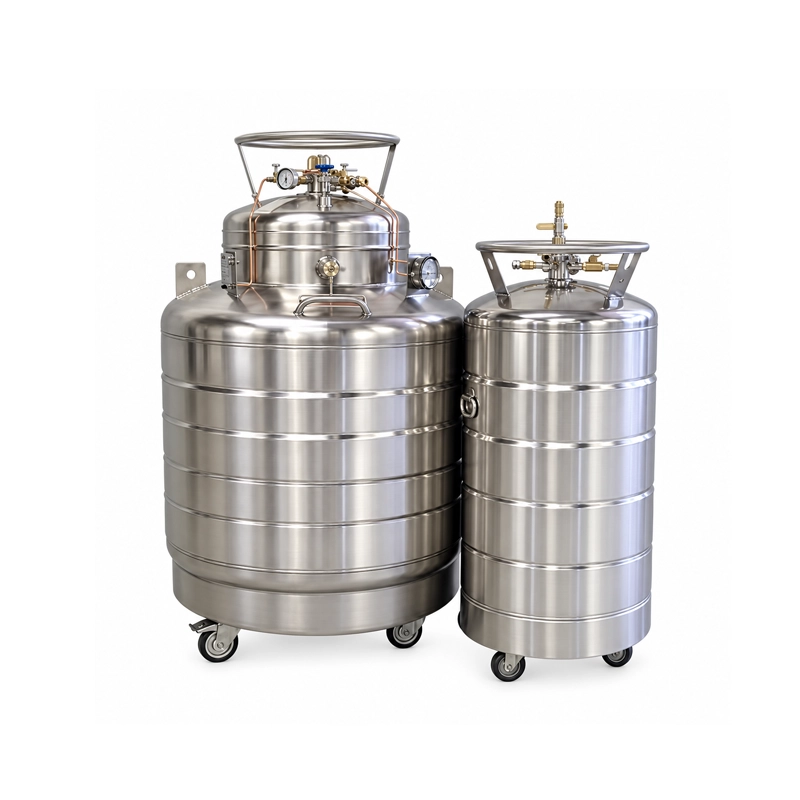
MRI liquid helium
MRI Liquid HeliumIt may seem strange that an element lighter than air, which makes balloons float, can also power medical diagnostic equipment! An interesting example is magnetic resonance imaging (MRI) machines, which cannot work without liquid helium. If you want to know why liquid helium is used in MRI machines, read on.

Why Is Helium Used in MRI Machines?
The reason helium is used in MRI machines comes down to the machine’s components. An MRI is usually made of a magnet and a number of coils. The magnet, whose main job is to create a magnetic field around the patient’s body, needs a lot of energy to maintain its superconducting state. Normally, as current flows through the magnet’s wires, resistance increases, which reduces the magnet’s superconductivity.
To reduce the resistance of the magnet’s wires to zero, they must be cooled to -273.15 °C, or zero kelvin. This is done with liquid helium, a superfluid with a temperature of -269 °C. To give you an idea of how much liquid helium an MRI machine needs: an 18-inch balloon needs about 0.1 ounce of helium (1 ounce is 28 grams), while an MRI machine needs 56,100 ounces!
History of Liquid Helium Use in MRI Machines
The use of liquid helium in MRI machines dates back to 1980, when helium was injected into the machine’s inner chambers. The outer chambers were still filled with liquid nitrogen until 1990, when they were replaced with cryocoolers, which eliminated nitrogen and reduced liquid helium consumption. Over time, special types of magnets were introduced that greatly reduced helium loss. These magnets are still used in MRI machines.
How Much Liquid Helium Does an MRI Machine Need?
Answering this question requires information about the type and size of the MRI machine. Roughly speaking, however, an MRI machine that operates at -269 °C uses about 1,700 liters of liquid helium.
Besides this figure, some quick calculations can give the amount of helium an MRI machine needs. If we assume the machine uses an average of 4 percent of its liquid helium capacity per month, or 48 percent per year, we arrive at 864 liters per year.
What Should You Consider When Filling an MRI Machine with Liquid Helium?
Following these tips when refilling an MRI machine can greatly help extend its life:
The Right Helium Level
The machine’s helium level should not drop below 65 percent. When the liquid helium reaches this level, refill it.
Liquid Helium Price
The price of helium varies from place to place. Try to buy the best quality so the machine is not damaged.
Servicing MRI Machines
The machine must be serviced regularly. This improves the efficiency of the liquid helium.
MRI Machine Capacity
MRI machines have different liquid helium capacities.
Liquid Helium Price for MRI
The Cost of Filling MRI Magnets with Liquid Helium
The cost of filling MRI magnets with liquid helium depends on several factors:
Helium Demand
The price of helium fluctuates with demand. If it is widely available, its price falls, and if it is scarce, its price rises. A rise or fall in helium prices raises or lowers the cost of filling the machine, respectively.
Magnet Type
The cost of filling an MRI machine depends on the magnet type. Some hold 300 liters of helium and others 1,800 liters. As the required volume increases, so does the filling cost.
Geographic Region
The price of helium filling varies depending on where you live (country or continent).
Liquid Helium in MRI Machines: From Use to Price
In this article we discussed the use of liquid helium, the coldest substance on earth, in MRI machines. As we said, helium plays a vital role in cooling the superconducting magnets in these machines. Its price is constantly fluctuating, and various factors such as the required volume and where you live affect its cost. To contact us, you can use the comments section. Our expert team is ready to answer your comments and questions.