

Alginate dressing
Despite the major advances made in recent years in wound healing through the use of dressings, the field still faces its main challenges. Many types of dressings have been introduced to the world so far, and one of the best known is the alginate dressing. Because of its unique properties, such as non-toxicity and biocompatibility, alginate as a biopolymer has wide applications in medicine and in the pharmaceutical and food industries. In medicine and treatment, this material has shown a special ability to heal wounds: on contact with wound fluid it becomes a gel or hydrogel, and it is used in many types of dressings in various forms (hydrogel, film, foam or porous sheet, nanofibers).
Alginate dressings, which are biodegradable, are made from seaweed. One of their most important features is their very high fluid absorption capacity, which makes them suitable for wounds with very heavy exudate. Because this type of dressing is not adhesive, a secondary dressing must be used with it. Other capabilities of this dressing include maintaining a moist environment for the wound and minimizing infection at the wound site; the latter applies when antibacterial components are used in them.
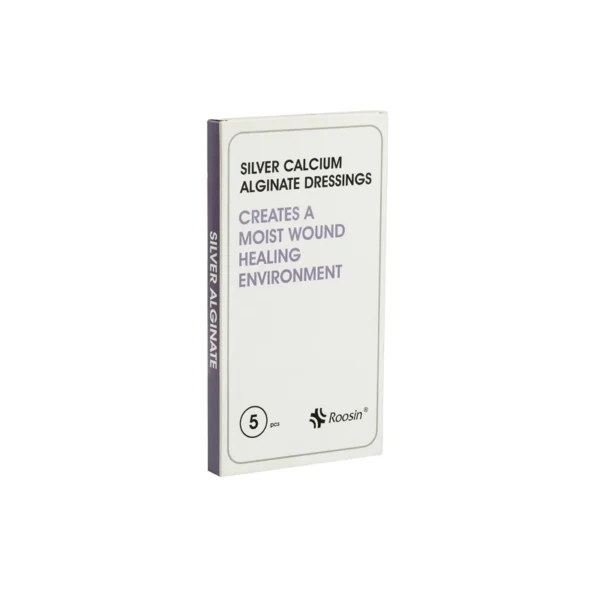
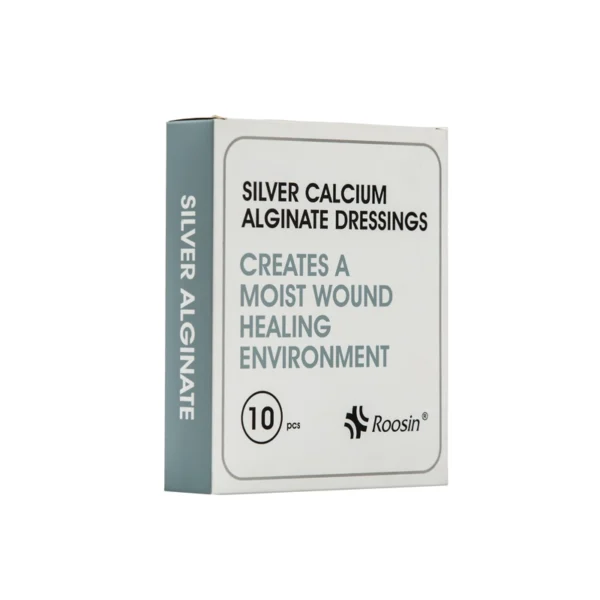
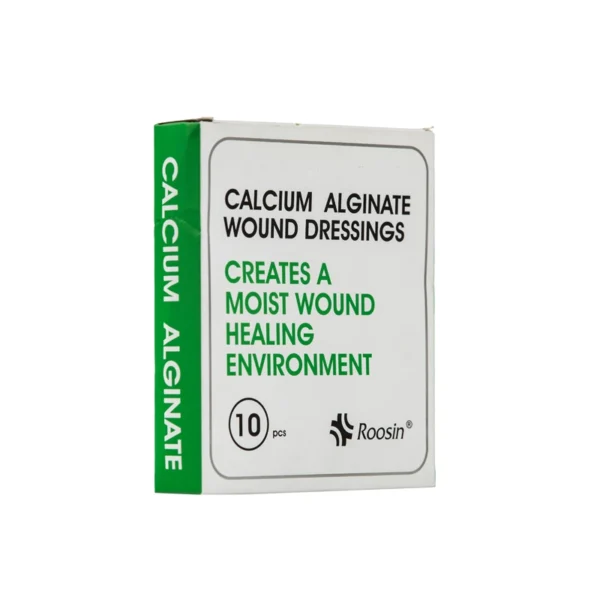
Structure and Composition of Alginate Dressings
The basic structure of alginate dressings consists of calcium alginate fibers; recently this structure has been improved by interlocking the fibers, which makes them highly resistant when soaked with blood or exudate. Rope and ribbon dressings are used to fill cavity wounds, while flat sheets are suitable for superficial wounds.
The M, G and MG groups in alginate affect the nature and conditions of gel formation. Gel forms faster in dressings with high M content than in those with high G content. In addition, the gel formed by high-M dressings is softer and more elastic, while high-G dressings form a stringy gel. Another difference is how they are removed: advanced dressings with high G content come off easily, whereas the other type can only be removed after being moistened with saline.
What Is Alginic Acid?
Alginic acid, also known as algin, is a biopolymer made of polyuronic acid chains extracted from algae, especially Laminaria. Alginic acid has a wide range of biological uses, one of which is use with formic acid. Alginic acid can absorb 200 to 300 times its own weight in water and solutes at low pH, producing a gel with high viscosity and pH. Alginate is the salt of alginic acid with metals such as sodium and calcium.
Features and Properties of Alginate Dressings
As mentioned, alginates are the sodium or calcium salts of alginic acid. When the calcium in the alginate reacts with the sodium in the wound, sodium alginate forms, which is a hydrophilic gel that absorbs fluid at the wound site. They are also very good absorbents and are used for wounds with moderate to very heavy exudate. Another property is that they absorb excess moisture from the wound.
Types of Alginate Dressings
Plain calcium alginate dressing
Dressings made from alginic salts are derived from seaweed. They are best known for their ability to absorb excess wound exudate and form a non-adherent gel, which speeds up wound healing by providing a moist environment.
Silver calcium alginate dressing
Silver calcium alginate dressings are made from natural fibers derived from seaweed. They are designed to be highly absorbent and form a gel-like layer around the wound. This layer helps healing by providing a moist environment around the wound. In fact, thanks to silver ions and their release at the healing site, this dressing creates an antibacterial environment that prevents biofilm formation while the wound heals.
More Information
Plain calcium alginate dressing (Simple calcium alginate dressing)
Plain Calcium Alginate Dressing
More Information
How to Use Alginate Dressings
Alginate dressings are very easy to use, with the following steps:
1- Clean the wound site with saline or a wound cleanser. Then dry it.
2- Place the alginate dressing on the wound. If needed, place a secondary dressing over the alginate dressing to hold it in place and absorb excess exudate.
3- Check the wound site daily to make sure it has not become infected.
4- Change the bandage after 5 to 7 days. Also change it if wound exudate has leaked out from the edge of the bandage or secondary dressing.
5- When changing the dressing, moisten the wound site with saline to avoid damaging the wound tissue.
6- If the dressing sticks to the wound, rinse it with saline to wet it.
How Do Alginate Dressings Help Wound Healing?
These dressings work through an interaction between their calcium ions and the sodium ions in wound exudate, which makes the fibers swell and partly dissolve into a gel. Three factors affect how much they swell: the dressing’s chemical composition, its plant source and its percentage of calcium ions.
Uses of Alginate Dressings
This dressing is used for wounds with different conditions to keep the wound from drying out and speed up healing. Wounds alginate dressings are used for include heavily exuding wounds, surgical wounds, graft donor site wounds, diabetic foot wounds, and superficial and deep burns.
Advantages of Alginate Dressings
One of the most important features of these dressings is their high absorbency; on average they absorb up to 15 times their own weight in exudate. They can also protect the wound from bacterial infection and speed up healing by creating a moist environment. As mentioned earlier, if silver ions are included in the dressing, it also has antibacterial properties. Other advantages of this dressing are that it is easy to use and causes allergies in very few people.
Disadvantages of Alginate Dressings
Alginate dressings are not suitable for treating bleeding wounds or wounds that are dry or have minimal exudate. They are also not a good option for surgical implants or third-degree burns. Care should be taken when placing this dressing on tumors or any wound with exposed blood vessels. Another disadvantage of alginate dressings is that they are non-adherent and need a secondary dressing.
When to Change an Alginate Dressing
Alginate dressings are usually changed every one to three days. However, depending on the wound’s condition, they can stay on for up to 7 days. The change interval depends on the wound’s characteristics and how wet the dressing becomes; if it has absorbed biological fluids up to its maximum capacity, it should be changed after a set period. Alginate dressings may stay on the wound until they are fully saturated.
Alginate Dressing Representative
The most important brands of this dressing include AlgiSite M (Smith & Nephew), Sorbsan (Bertek) and SeaSorb (Coloplast).
Cost of Alginate Dressings
Prices vary widely, from about 15,000 Tomans to more than 200,000 Tomans.