
What Is a Wound? Types, Care and Treatment with Advanced Dressings
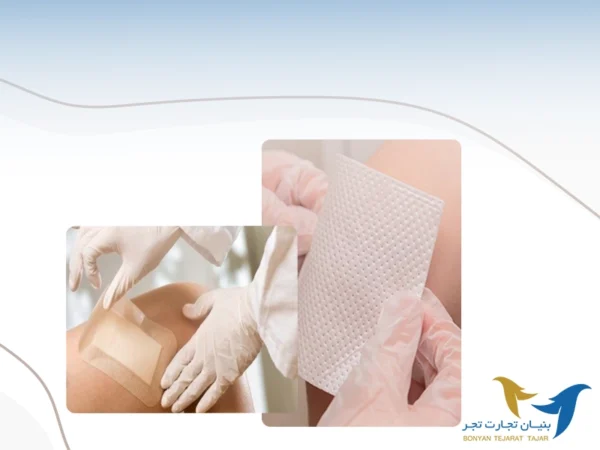
A wound is a break in part of the body’s tissue. This break can occur in several ways, the most important being abrasions, lacerations, cuts or punctures, burns of various degrees, diabetic wounds acute and chronic wounds, and traumatic wounds.
Wounds are classified as open or closed. Open wounds are wounds in which the body’s protective surface (skin or mucous membranes) is broken, allowing foreign material and infectious microorganisms to enter the tissues. In closed wounds, by contrast, the damaged tissues are not exposed to the outside environment and healing takes place without contamination.
Wounds are also divided into four categories based on the level of contamination:
Clean wound
This type of wound occurs under sterile conditions, that is, conditions with no pathogens. Unlike other wounds, clean wounds heal easily.
Contaminated wound
Contaminated wounds are usually caused by accidents. Pathogenic organisms and foreign bodies are found in these wounds.
Infected wound
In this type of wound, pathogenic organisms are present and multiplying. Other characteristics of infected wounds are clinical signs of infection (yellow appearance, pain, redness, pus discharge).
Colonized wound
Colonized wounds are a chronic wound state containing pathogenic organisms. These wounds are hard to heal; one example is bedsores. They sometimes heal more slowly due to complications in the host’s immune system and healing.
Wounds are classified as open or closed. Open wounds are those in which the outer layers of the skin are damaged, so foreign material easily enters the tissues. Closed wounds, on the other hand, are those in which the outer layers of the skin are not damaged and the injured tissues are not exposed to contaminants and microorganisms.
Wounds are mainly caused by abrasion, laceration, surgery, burn wounds, bedsores, diabetic wounds, punctures and avulsions. Today, specialized dressings are used to treat open wounds. There are many types of these dressings, each of which promotes healing in a different way by providing a moist environment for the wound.

Diabetes is a disease that few people have not heard of. Like other diseases, it causes complications in those affected, one of the most common being foot ulcers.
Pressure ulcers, also known as bedsores, are caused by prolonged pressure on one or more points of the body. Various factors contribute to this type of wound, the most important being immobility.
One of the most common and effective ways of caring for wounds is using dressings, of which there are many types. These dressings are sterile and provide a moist environment for treating bedsores. They are also easy to use and do not need frequent changes.
Other advantages of advanced wound dressings include reducing pain, controlling wound exudate, reducing wound inflammation and not contaminating the wound with residual particles. A dressing is a sterile pad, gauze or compressed fabric used to care for a wound, prevent damage to it and help it heal. Depending on the type of wound, different dressings are used, the most important of which are listed below:
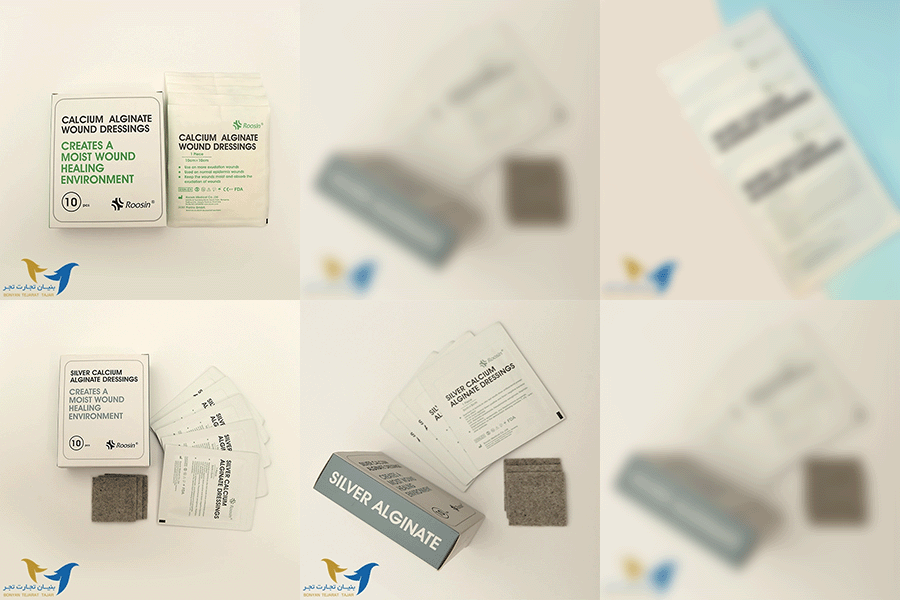
One of the most common and widely used wound dressings is alginate. This dressing is made from seaweed through special processes. One of its most important features is that it is biodegradable. It is also highly absorbent, which makes it suitable for heavily exuding wounds. Alginate dressing It can absorb 15 to 20 times its own weight in exudate. Other advantages of this dressing are that it is easy to use and does not cause allergies.
Alginate works through an interaction between the calcium ions in the dressing and the sodium ions in the wound, which turns it into a gel-like substance. This gel promotes healing by providing a moist environment for the wound.
As mentioned, alginate dressings are used for heavily exuding wounds such as very deep wounds, severe pressure ulcers and burns. This dressing cannot be used for dry or low-exuding wounds, because its very high absorbency creates an even drier environment.
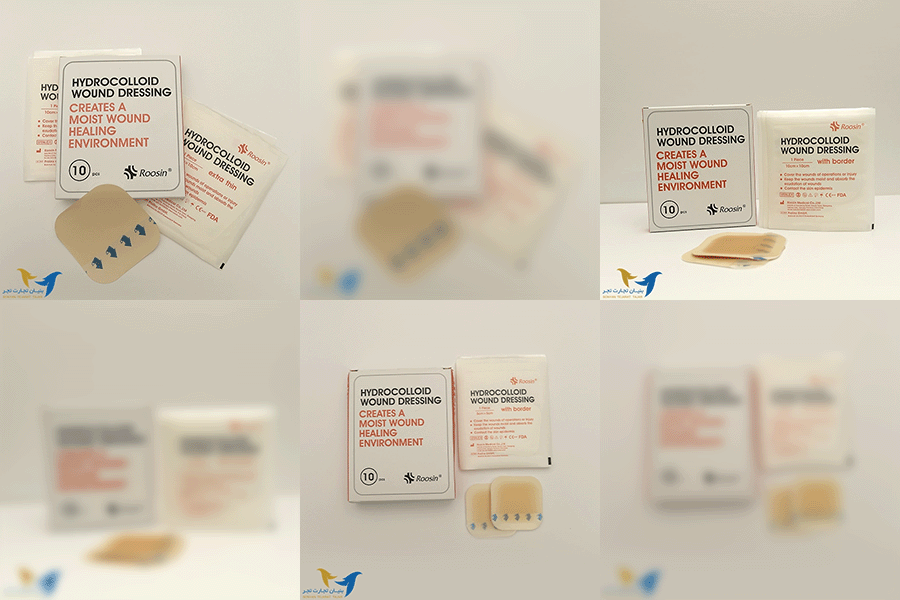
Hydrocolloid dressing Another type of dressing that can be used as both a primary and a secondary dressing. It is made of a hydrophilic inner layer containing compounds such as carboxymethyl cellulose, pectin or gelatin, and a hydrophobic outer layer. When hydrocolloid dressings come into contact with wound exudate, they absorb it and turn into a gel-like substance (on a small scale), which provides a moist environment for wound healing.
The outer layer is made of polyurethane and protects wounds from external agents such as bacteria. Hydrocolloid dressings can be used for many types of wounds, such as deep and partial-thickness wounds, granulating and slightly necrotic wounds, large surgical wounds, wounds with low to moderate exudate, and pressure ulcers such as bedsores.
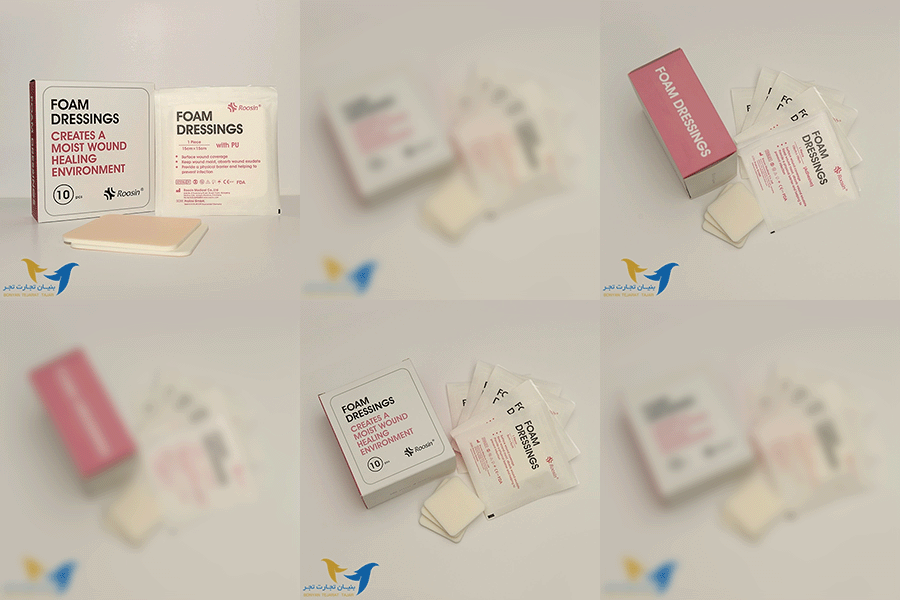
Foam dressings play an important role in wound healing. This dressing is made of semi-permeable polyurethane with pores that absorb and retain fluid. Its absorbency varies with the thickness of the dressing. The contact surface is non-adherent and lint-free, which makes removal easier.
The outer layer of foam dressings is waterproof, preventing bacteria and other contaminants from entering the wound while also keeping exudate from striking through to the outer backing. This dressing is available with or without an adhesive border. It also comes in various sizes and shapes on the market. Some dressings include a bacterial barrier made of a transparent film. In addition, some contain an antibacterial agent such as silver, Manuka honey or antibiotics.
By providing a moist environment, foam dressings help heal many types of wounds, such as wounds with low and heavy exudate, leg ulcers, surgical site wounds, skin graft wounds, minor burns, abrasions, infected wounds and lacerations, draining peristomal wounds, pressure ulcers, wounds requiring negative pressure wound therapy (NPWT), and tracheostomy and gastrostomy tubes. Foam dressings also play a major role in offloading pressure from the wound.
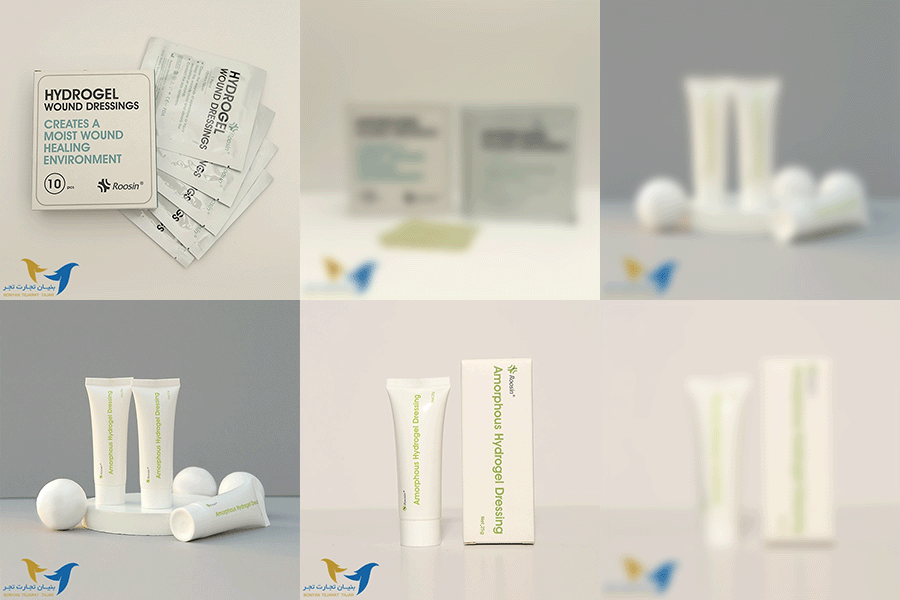
Hydrogel dressings are made from hydrophilic polymers containing large amounts of water (90 percent water). They heal wounds by providing a moist environment, reducing pain and reducing infection. This is one of the most widely used dressings and is useful for healing a wide range of wounds, such as pressure ulcers, necrotic wounds, infected wounds, low-exuding wounds, second-degree burns and painful wounds.
Transparent dressings are easy to use because they are thin. This dressing is made of polyurethane. One side is adhesive and sticks to the skin around the wound but not to the wound itself. Transparent dressings have advantages. One is that they are flexible. They are also elastic. And because the dressing is transparent, the wound can be inspected without removing it.
Although dressing a wound seems simple, if it is not done properly it can cause complications such as infection and delay wound healing. Also, dressings sometimes need to be done for elderly people who cannot visit medical centers. In these situations, it is best for wounds to be dressed at home by specialists.
People often dress wounds at home on their own and treat them this way. But they may wonder whether the dressing they applied was the best way to dress the wound. Keep in mind that improper wound dressing can often cause complications, including infection. It is therefore recommended that wounds be dressed by specialists whenever possible.

Wound treatment supplies vary with the type of wound. For minor wounds, dressings, sterile gauze pads, medical tape and antibiotic ointment are used. But serious wounds need special care to prevent any wound infection.
Dressings can be used to care for wounds and manage their treatment. A dressing is placed over the wound as a covering that protects it from microorganisms and contaminants. It also provides a moist environment for the wound, which promotes healing. Advantages of dressings include preventing wound infection, absorbing exudate and blood, and protecting against physical injury.
One of the most important wound complications is infection. Also, when direct pressure does not stop bleeding, problems can arise. Signs such as increased exudate, foul-smelling or unusually colored pus, fever and a wound that does not heal indicate wound infection.
One of the most effective ways of Preventing Wound Infectionis using a dressing. Besides providing a moist environment for healing, a dressing prevents microorganisms and other contaminants from entering the wound. Dressing the wound also helps protect it against infection.
An ideal dressing for treating bedsores should have the following features:
When dressing a wound, you should pay attention to the following points:
· Avoid sneezing or coughing while dressing a wound, as this can contaminate it.
· If saline is not available, you can dissolve some salt in boiled, cooled water (9 grams of salt per liter of water) and use it to wash the wound.
· Do not use cotton wool to cover or clean the wound, because cotton fibers stick to the wound.
· If the wound is bleeding heavily, first control the bleeding, and if the gap between the wound edges is large, have the wound stitched to speed up healing.
· The dressing should be the right size for the wound and cover it completely.
· A doctor’s instructions are required before using antibiotic ointment.
· For wound management it is best to use forceps. If these are not available and you handle the wound by hand, wash your hands thoroughly with water and soap and wear gloves. Also avoid touching the part of the dressing that will be placed on the wound.
Dressing a wound involves several steps:
1. First, gently press on the wound with a clean cloth or tissue. This helps the blood clot and stops the bleeding.
2. After preparing the supplies needed for dressing, wash your hands with warm water and soap and disinfect them. Once your hands are completely dry, put on sterile gloves.
3. If there is a dressing on the wound, remove it carefully, then wash and disinfect your hands again.
4. Thoroughly wash and clean the wound and the area around it with saline and sterile gauze.
5. Once the wound and area are completely dry, place the wound dressing on it and secure it.
Although many wounds can be dressed at home, sometimes people need to see a doctor for wound treatment, including:
· If the wound is more than 2 cm deep.
· If the bleeding does not stop with pressure.
· If the bleeding lasts more than 20 minutes.
· If the bleeding occurred in a serious accident.
· If the wound has become infected
· If the patient has diabetes or metabolic diseases, or a history of chemotherapy and cancer wounds
· If a long time has passed since the wound occurred but it has not healed
The change interval depends on the type of wound. If the wound is moist, it is best to change the dressing several times a day so it does not become infected. But if the wound is dry, changing the dressing daily is enough.
Leave a comment.
Your email address will not be published. Required fields are marked *

What Causes Burns in Diabetic Patients? Diabetic neuropathy is the most important cause of burns in people with diabetes. Neuropathy...

Simply put, blood pressure is the force that blood exerts on the walls of your blood vessels. Blood pressure is...
Did you know that modern ostomy bags are odor-free and ordinary people do not notice ostomy patients' bags? To learn...
To buy a product, request a price quote or get specialized advice, contact our sales experts. Our team is ready to provide the information you need and guide you in choosing and buying the right product for your needs.
سلام وقت بخیر
من پسرم دچار سوختگی شده و پزشک هم بردم ولی هنوز خوب نشده این نوع پانسمان ها در درمان سوختگی تاثیر داره ؟
و اینکه خودم میتونم از اینها رو خرید کنم و استفاده کنم یا اینکه حتما باید پزشک تجویز کنه
سلام وقت بخیر دوست عزیز
به منظور درمان سوختگی در منزل باید به این نکته توجه نمود که برخی از سوختگی های درجه یک که سطح آسیب جزئی است و لایه های زیرین جلدی را درگیر نکرده و احتمال عفونت نیست، امکان پذیر است.
برخی از پانسمان های هیدروژل و هیدروکلویید در درمان این عارضه کاربرد دارند، ولی توصیه میکنیم که اگر فرایند درمان طولانی شده است حتما با درمانگران زخم مشورت گردد.