
What Is a Spinal Needle?
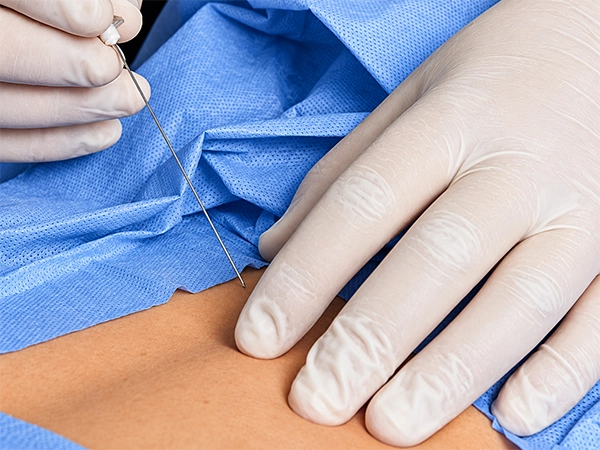
With a Spinal Needle, General Anesthesia Is No Longer Needed!
Did you know that today there are surgical methods that do not require general anesthesia? The spinal needle has made these methods possible. In this article, we look at this important and widely used medical tool. We start by explaining what parts a spinal needle is made of. Then we explain topics such as the needle’s features and how to use it.
Spinal needle
When you hear the name spinal needle, you might picture just a needle. But it is quite different. Besides the needle, this device includes other parts:
Disposable spinal needles are medical tools used in spinal anesthesia to inject local anesthetics or other drugs into the cerebrospinal fluid. These needles are designed to be used only once and must be discarded after use to prevent the spread of infectious diseases. The important point when using a disposable needle is to sterilize the site with an antiseptic solution to avoid infection.
The spinal needle, which is mainly used for lumbar puncture (puncturing the lower back and injecting anesthetic), has the following features:
One question you may have is whether using a spinal needle has complications and whether it can cause problems. The answer is yes. The most common complication of the spinal needle is headache after lumbar puncture. It can also cause problems such as brain herniation, infection, bleeding, back pain and subdural hematoma (bleeding under the dura).
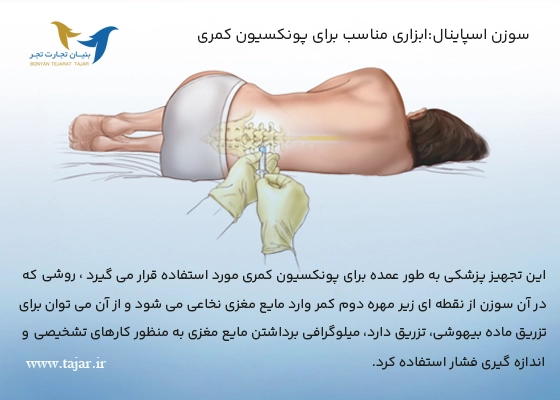
One point to consider when using the spinal needle and performing spinal anesthesia is the patient’s position. For lumbar puncture, the patient can be sitting or lying down.
If spinal anesthesia is to be performed lying down, it is best to lie on your side and pull your knees toward your chest. This opens the spaces between the bones of the lower spine and makes it easier to insert the needle. Once in position, insert the needle into the spinal canal to withdraw cerebrospinal fluid or inject anesthetic.
As we explained, spinal needles are made up of several parts, each with a different role. The unique design of this medical device has reduced headaches after lumbar puncture, the most common complication of this technique. In another part of the article we covered how to use the needle; if you have questions about this or other sections, you can ask us and we will answer as soon as possible.
Did you know that today there are surgical methods that do not require anesthetizing the patient? The spinal needle has made these methods possible. In this article, we look at this widely used medical tool. First, we define the spinal needle. Then we explain various topics about it, including models, uses and how to use it.
Before we start, let’s look at what a spinal needle is.
This medical device is mainly used for lumbar puncture, a procedure in which the needle enters the cerebrospinal fluid below the second lumbar vertebra, and which can be used for injecting anesthetic (spinal anesthesia), injecting drugs, myelography (imaging of the spinal cord), withdrawing cerebrospinal fluid for diagnosis, and measuring pressure.
The spinal needle is made up of several parts, each designed for a specific purpose. The components of the spinal needle are covered below.
When you hear the name spinal needle, you might picture just a needle. But it is quite different. Besides the needle, this device includes other parts:
It is transparent and, with its magnifying effect, lets you see cerebrospinal fluid flowing back and the exact position of the needle tip.
This part helps stabilize the spinal needle during insertion and helps it pass through tough (non-supple) skin.
Prevents tissue from blocking the needle as it is inserted. The stylet sits inside the spinal needle.
The case that holds the needle.
One feature that has made the spinal needle a widely used medical tool is that it can be used for all ages. Needles are made in different sizes (based on their diameter). Their length varies from 70 to 150 mm but is usually 90 mm.
The spinal needle size is chosen based on the patient’s age and weight. Typically, higher-gauge needles (smaller and thinner) are used for young people such as newborns, children, adolescents and patients with a slight build who are sensitive to pain. Lower gauges are suitable for adults.
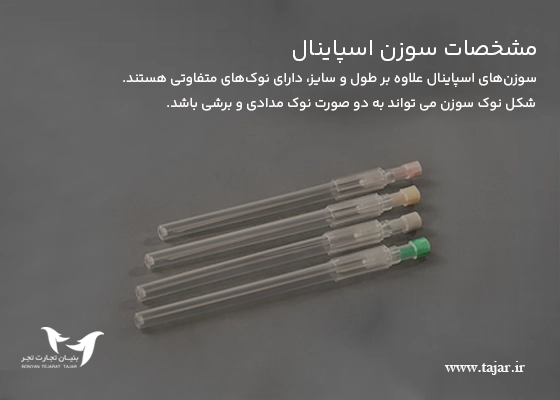
Another feature of this medical device is the use of different colors in the needle hub design, which makes it easy to identify the spinal needle size. The table below shows the types of spinal needles and can serve as a guide for choosing a needle based on your physical characteristics.
Types of spinal needle products. Technical specifications of spinal needles. Besides length and size, spinal needles have different tips. The needle tip can be pencil-point or cutting (Quincke), and the pencil-point type comes in Whitacre and Sprotte forms. Comparing the pencil-point and cutting tips shows that although the cutting needle cuts through the dura more easily and enters the spinal canal, the risk of nerve damage is higher and post-lumbar-puncture headaches are more severe. Pencil-point needles are therefore recommended.The spinal needle and how to use it. One point to consider when performing spinal anesthesia is the patient’s position. For lumbar puncture, the patient can be sitting or lying down. If spinal anesthesia is to be performed lying down, it is best to lie on your side and pull your knees toward your chest. This opens the spaces between the bones of the lower spine and makes it easier to insert the needle. The needle is then placed in the spinal canal to take a sample of cerebrospinal fluid or inject anesthetic. The spinal needle and its possible complications. So far in this article, we have described the benefits of spinal needles. You may wonder what the complications are and whether using this device can cause problems for the patient. The most common complication of spinal needles is headache after lumbar puncture. It can also cause problems such as brain herniation, infection, bleeding, back pain and subdural hematoma (bleeding under the dura). Spinal needle price and purchase. As mentioned, needles come in various types, and this along with other factors such as the exchange rate affects the price of spinal needles. It is therefore recommended to contact our experts at Bonyan Tajar before buying this product to find out its latest price. Many people who want to buy spinal needles do not live in Tehran or prefer to buy online for other reasons. Fortunately, we make it possible for our customers to buy online.
Quick Contact with Sales Experts
The spinal needle: a widely used medical tool. In this article, we learned about the uses of the spinal needle and saw that it can be used for injecting drugs, regional anesthesia, imaging the spinal cord and sampling cerebrospinal fluid for diagnosis. We also explained that needles are made in different sizes, each used for a specific age group. Finally, please help us improve our content by sharing your comments and suggestions in the comments section. You can also ask us questions about spinal needles, and we will answer as soon as possible.
| Size (gauge) | Size (mm) | Color |
| G16 | 6/1 | White |
| G18 | 2/1 | Pink |
| G19 | 1/1 | Cream |
| G20 | 9/0 | Yellow |
| G21 | 8/0 | Green |
| G22 | 7/0 | Black |
| G24 | 6/0 | Blue |
| G25 | 5/0 | Orange |
| G26 | 45/0 | Brown |
| G27 | 4/0 | Gray |
Leave a comment.
Your email address will not be published. Required fields are marked *

What Causes Burns in Diabetic Patients? Diabetic neuropathy is the most important cause of burns in people with diabetes. Neuropathy...

Simply put, blood pressure is the force that blood exerts on the walls of your blood vessels. Blood pressure is...
Did you know that modern ostomy bags are odor-free and ordinary people do not notice ostomy patients' bags? To learn...
To buy a product, request a price quote or get specialized advice, contact our sales experts. Our team is ready to provide the information you need and guide you in choosing and buying the right product for your needs.
Leave a Reply