
Laparoscopic circular stapler
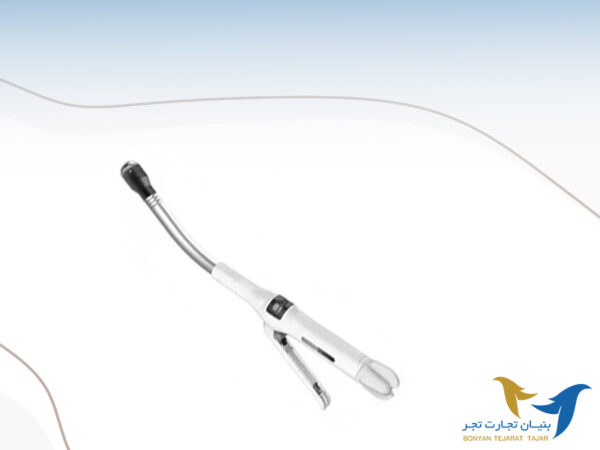
Laparoscopic surgery is a modern surgical technique that has replaced many traditional methods. It is used for operations in the abdomen and pelvis. The surgeon makes very small incisions and inserts thin, delicate instruments such as a laparoscope, or laparoscopic camera, into the abdomen. The camera records every moment of the operation, allowing the surgeon to control the procedure. One instrument needed for laparoscopic surgery is the stapler. It is used when making several small incisions in the abdomen and placing the laparoscope and other instruments inside. Staplers are available in various sizes and heights, allowing surgeons to choose a size that provides hemostasis or tissue approximation without ischemia or tissue damage.
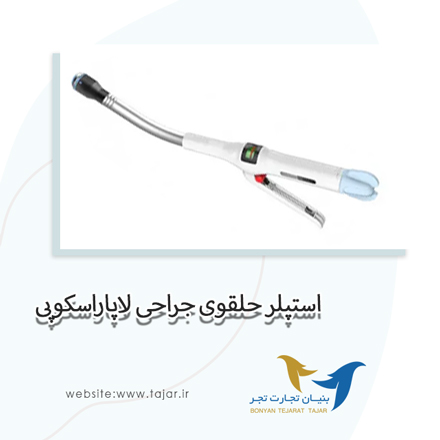
One of the instruments needed for laparoscopic surgery is the stapler. Surgical staplers are special staples used to close, or staple, surgical wounds. They are also used to close or remove parts of organs or tissues inside the body, such as the intestines or lungs. An important difference between sutures and staples is that sutures often dissolve in the patient’s skin after the wound has fully healed, whereas surgical staples must be removed by a doctor after the patient has fully recovered.
Surgical staples are mainly made of titanium or stainless steel. Other metals such as chromium, nickel and iron are also used. There is also a plastic type, mostly used for patients sensitive to metal staples. Plastic surgical staplers are mainly disposable.
Stapler staples mainly come in three forms: circular, laparoscopic and titanium, each described below:
This type of staple is used for end-to-end anastomosis after bowel resection.
Laparoscopic staples are longer and thinner than the circular type and are mostly used in minimally invasive surgery.
Titanium is a strong yet flexible metal. Titanium staples are often used in internal surgery. They often contain nickel, so they are not pure titanium.
Surgical staplers are classified into two groups: circular and linear. Linear cutter staplers have a handle that surgeons use to place a row of staples on the wound to hold the tissue together. They also cut off excess tissue after the wound is joined, helping the wound close. Circular staplers place staggered rows of staples on the wound. Thanks to their circular structure, they can be used to close parts of tubular organs or other structures inside the body. Circular staplers are explained in more detail below.
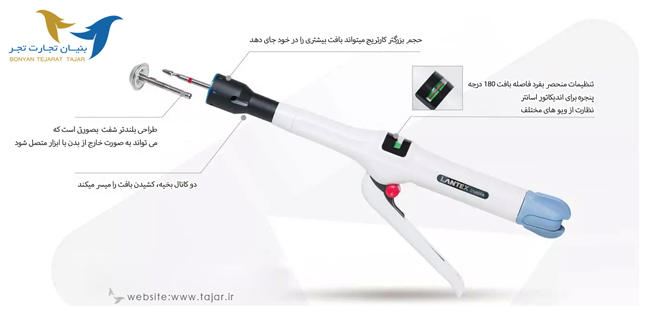
Circular staplers are a type of stapler that is usually disposable. They work by placing a double circular row of titanium staples at the target point. Once the staples are formed, the excess tissue is cut away and a circular anastomosis (join) is formed.
This instrument can be used in the digestive tract to create various types of anastomoses in both open and laparoscopic surgery. Its advantages include saving operating time and reducing bleeding. It is also convenient and suitable for suturing.
Laparoscopic circular staplers are used for various purposes, such as creating anastomoses in the abdomen. They are also used to close off blood vessels. They are flexible and disposable. As mentioned earlier, this type of stapler places two rows of titanium staples side by side while its cutting blade divides the target tissue into two parts at the same time.
The laparoscopic circular stapler can cause complications for the patient. The most important potential risks are bleeding, infection, and leakage of contents from organs due to anastomotic failure.
Once the tissue is fully positioned between the stapler’s anvil and cartridge, press the lock lever to secure the tissue within the stapler. Then activate the device and squeeze the handle to fire; stapling and cutting happen at the same time.
Disposable circular staplers are widely used in the digestive tract for cutting and for various anastomoses, such as end-to-end, end-to-side and side-to-side. Excess tissue is cut by creating a circular anastomosis. Circular staplers are also used to remove part of the intestine, stomach and esophagus, and in surgery for various cancers such as esophageal, stomach and small intestine cancer.
In stapled hemorrhoidopexy or hemorrhoidectomy, a stapler is used to treat hemorrhoids. Hemorrhoids occur when the blood vessels in the anal area become enlarged. In this procedure, the hemorrhoidal tissue is tied off to cut off its blood supply and shrink it. The procedure is usually performed on hemorrhoidal vessels with fewer nerves.
This method has advantages. One is that no scalpel is used for cutting, which causes very little pain for the patient. Another is that general anesthesia is not needed; it can be done under local anesthesia. The risk of infection with this method is also very low. On the other hand, it has complications, the most important being bleeding, anal narrowing due to scarring, damage to the anal wall, reactions to anesthetics, and difficulty with bowel movements due to swelling and muscle spasms.
Leave a comment.
Your email address will not be published. Required fields are marked *

What Causes Burns in Diabetic Patients? Diabetic neuropathy is the most important cause of burns in people with diabetes. Neuropathy...

Simply put, blood pressure is the force that blood exerts on the walls of your blood vessels. Blood pressure is...
Did you know that modern ostomy bags are odor-free and ordinary people do not notice ostomy patients' bags? To learn...
To buy a product, request a price quote or get specialized advice, contact our sales experts. Our team is ready to provide the information you need and guide you in choosing and buying the right product for your needs.
Leave a Reply