
Safely Changing a Foley Catheter: Key Tips for Better Care
People who have permanently or temporarily lost control of their urine probably know the Foley catheter . This device, also known as a urinary catheter or Foley catheter, is used to collect and drain urine. To prevent infection, the urinary catheter must be changed regularly. In this article, you will learn step by step how to change your Foley catheter yourself at home.
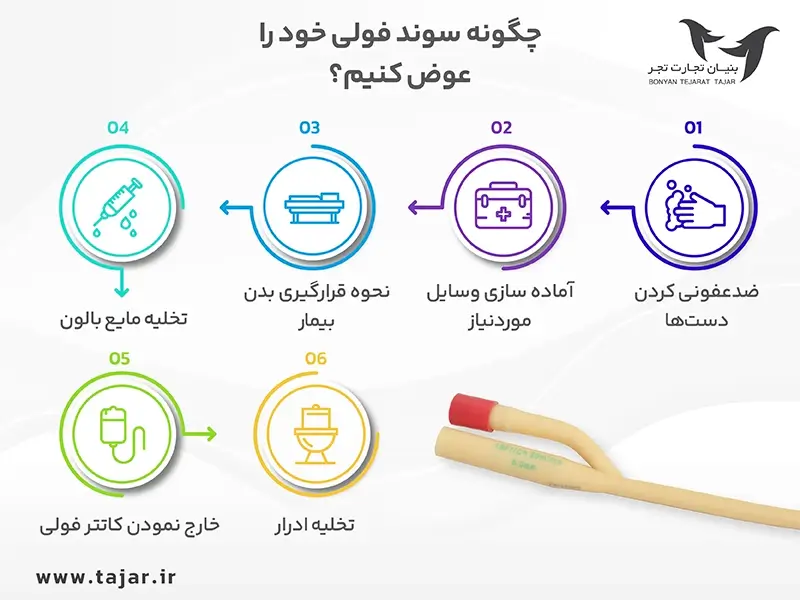
How Do I Change My Foley Catheter?
Prepare the supplies you need and remove the old catheter.
Disinfect your hands
Wash your hands with warm water and soap for at least 30 seconds. If your hands are already clean, just use hand sanitizer. But if your hands are dirty, first wash them with soap and water and then use sanitizer. Let your hands dry completely before you start changing the catheter.
Prepare the supplies
Prepare the supplies you need, such as gloves, a new urinary catheter, a syringe, soap and disinfectant.
Positioning the patient
Have the person lie on their back and remove their underwear. Spread their legs slightly. Make sure you have enough light for this step. Then put on your gloves.
Deflating the balloon
Insert a 10 cc syringe into the inflation port and pull back the plunger to draw all the fluid from the balloon into the syringe (usually about 3 to 10 cc).
How to remove the Foley catheter
Gently pull the Foley catheter to remove it. If the catheter does not come out easily, do not continue; repeat step 4. If you still cannot remove it, contact a healthcare provider.
Emptying the urine
Empty the urine into the toilet. Then throw the urine bag, Foley catheter and syringe in the trash.
Before inserting the new Foley catheter
Take the necessary steps before inserting the new catheter.
- Wash the area of the body where the catheter will be inserted. You can use a washcloth with soap and water. Dry the area well with a towel. Throw away the gloves you used for this.
- Wash your hands again. Place the drainage container that will collect the urine next to the person.
- Place a sterile cloth under the buttocks (for women) or under the penis (for men).
- Put on sterile gloves and take the Foley catheter out of its packaging.
Before inserting the new Foley catheter
Insert the Foley catheter.
The steps for inserting the catheter differ depending on the person’s sex (female or male).
If the patient is female:
1- With your non-dominant hand (the hand you don’t write with), spread the labia (the entrance to the female genital area) to see the urethra. Note that this hand is no longer sterile.
2- With your dominant hand (the hand you write with), use forceps to pick up a cotton ball and clean the area. Wipe one side at a time, from top to bottom and front to back. Use a new cotton ball to clean the middle of the urethra.
3- With your sterile dominant hand, roll the tip of the Foley catheter (2 to 3 inches of it) in lubricant.
4- Place the end of the catheter’s drainage port in the drainage container. Gently and steadily insert about 1.5 to 3 inches of the catheter tip into the urethra until urine starts to come out of the drainage port. Gently insert the catheter 1 to 2 inches further. If urine does not come out immediately, wait a few minutes for a few drops to appear.
Caution!
Never force the catheter into the bladder. Ask the person to breathe slowly and deeply to make insertion easier. If you cannot insert the Foley catheter, contact a healthcare provider such as a doctor or nurse.
5- To inflate the catheter balloon, insert the prefilled water syringe into the inflation port. Inject 5 to 7 cc into the balloon. Twist the syringe to remove it.
6- Gently pull the catheter back to make sure the balloon is inflated. You can then connect the catheter to the urine bag.
7- Empty the urine into the toilet. Throw away used items, including gloves. Wash your hands again.
If the patient is male:
1- Hold the penis with your non-dominant hand. If the person has a foreskin, pull it back until you can see the opening of the urethra. Note that this hand is no longer sterile.
2- With your dominant hand, use forceps and clean the area with cotton. Start at the urethra and wipe once in a circular motion. Finally, clean the opening of the urethra thoroughly with cotton.
3- With your sterile dominant hand, pick up the Foley catheter and roll its tip in lubricant.
4- Place the end of the drainage port in the drainage container. Hold the penis upright and gently and steadily insert the catheter tip about 8 to 12 inches into the urethra until urine starts to come out of the drainage port. Gently insert the catheter 1 to 2 inches further. If no urine comes out, wait a few minutes for a few drops to appear.
5- Insert the prefilled syringe into the inflation port and continue the remaining steps as for female patients.
FAQ
What Should I Do If the Urinary Catheter Falls Out?
In this case, do not try to change the catheter yourself. Get help from a doctor or nurse.
How Often Should I Change My Foley Catheter?
How often to change a Foley catheter depends on factors such as its material and whether it is blocked. But it should usually be changed every 3 to 12 weeks. (If the person is prone to urinary infections, it should be changed more often.)
I recently removed my catheter and now I have a fever. What should I do?
Fever can be a sign of infection. If you have a fever, you should raise it with your doctor.
Is it dangerous to see leakage around the tube and feel pain in the bladder area?
No, occasional leakage is due to bladder spasms. To treat it, you can ask your doctor to prescribe medication.


Leave a Reply