The first endotracheal tube was introduced by the Portex medical center; it was uncuffed and white. Later, an anesthesiologist named Magill developed a cuffed endotracheal tube that, besides the cuff, also had a blue stripe. This technology was later adopted by manufacturers around the world.
Many efforts were made to develop this device until David Sheridan succeeded in producing the first disposable plastic endotracheal tube, which is still used in surgery today. Before disposable tubes were introduced, reusable tubes were used; the endotracheal tube was sterilized for reuse.
What Features Does an Endotracheal Tube Have?
Most endotracheal tubes used in medical centers are made of polyvinyl chloride. Besides this material, other materials such as silicone, rubber and steel are used to make the tubes.
This widely used medical device comes in cuffed and uncuffed versions. The cuffed type itself comes in three types: low-pressure, low-volume and foam-filled. The cuff can be inflated. When the tube is placed in the patient’s trachea, the cuff is filled with air to prevent air leaks and keep blood and stomach contents out of the patient’s airway.
Unlike the cuffed tube, the uncuffed type has more limited use and is mostly used in children. The cricoid cartilage in children acts like a cuff, so there is less need for a cuff in this age group.
What Are the Parts of an Endotracheal Tube?
1- Tip: the tip of the endotracheal tube is beveled or tapered and faces left. The tapered design helps the tube pass easily through the vocal cords, and facing left gives the user a better view.
2- Murphy eye: although a beveled tube passes easily through the vocal cords, its tip is likely to become blocked by contact with the tracheal wall. If the tip becomes blocked, the Murphy eye serves as an alternative path for air.
3- Cuff: most tubes used for adults have a cuff. Uncuffed versions are also available and are used for children.
4- Connector: the proximal end of the tube has a 15 mm connector (outer diameter) attached. This connector allows the tube to connect to various breathing and anesthesia equipment.
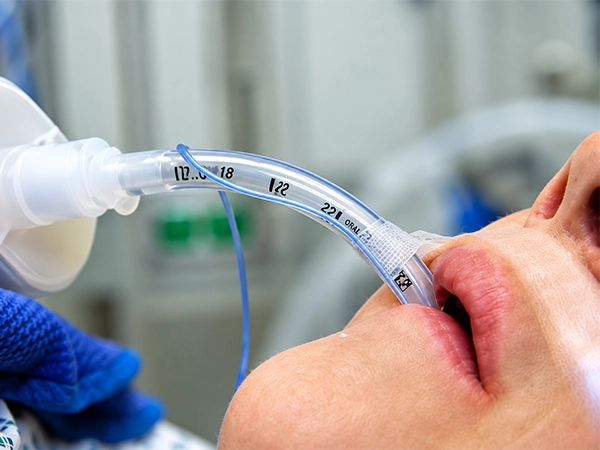
5- Markings on the tube: depending on the type and brand of endotracheal tube, several markings appear on it, including the size or inner diameter (in mm), length (in cm) and outer diameter (in mm).
6- Radiopaque line: many tubes have a radiopaque line running to their end. This line is useful when the tube’s position needs to be seen on a chest X-ray.
7- Magill curve: the endotracheal tube has a curved shape called the Magill curve. The Magill curve makes it easier to place the tube in the trachea because it resembles the shape of the airway.
What Are the Advantages of an Endotracheal Tube?
As mentioned, the endotracheal tube acts as an artificial path for breathing gases to reach the lungs and makes breathing easier for patients. It also has other benefits, including:
It prevents aspiration of stomach contents as well as throat secretions and blood.
It makes repeated suctioning easy.
The patient’s position can easily be changed (except lying flat) without harming them.
It is suitable for surgery near the airway, such as the head and neck and ear, nose and throat.
It can be used when maintaining the airway with a mask is difficult.
It can be used for patients with gastrointestinal obstruction.
It is suitable for conditions affecting the upper airway.
How to Insert a Cuffed Endotracheal Tube
Although laryngoscopy can have complications, it is still the most common method for inserting an endotracheal tube. Laryngoscopy involves the following steps:
First, the bed and the patient’s face should both be in a suitable position relative to you. You can have the person lie on their back facing up. In this position, the airway is straight and gives you a good view.
Pick up the laryngoscope with your left hand. Separate the jaws using the thumb and index finger of your right hand.
Pass the blade from the right side and gently guide it toward the center and left. The tip of the laryngoscope blade should sit between the epiglottis and the base of the tongue.
Lift the laryngoscope up and forward without putting pressure on the teeth. The hyoepiglottic ligaments are stretched and the epiglottis tips up toward the blade.
Finally, visualize the glottis and insert the endotracheal tube. To do this, simply pass the tube’s cuff through the glottis.
Cuffed Reinforced (Spiral) Endotracheal Tube
The spiral, or reinforced, endotracheal tube is one type of endotracheal tube. Its most important features include flexibility, a smooth tip, a Murphy eye, a low-pressure cuff, a pilot balloon and check valve, and a standard connector. The spiral tube comes in various sizes and can be used for all age groups.
The process of placing the spiral tube in the trachea is called laryngoscopy, because a laryngoscope is used to do it. Besides its advantages, intubation with a spiral tube can have drawbacks. The most important are broken teeth during laryngoscopy, laryngospasm due to the inflated cuff in the trachea, damage to the vocal cords and bleeding, hoarseness after surgery, and injury to the mouth.
The Endotracheal Tube: Old but Still Widely Used
As is clear, the endotracheal tube is a medical tool with a long history and has been used for a very long time. Its role in creating an airway for people with breathing problems means it is still widely used. In this article we also covered how to use the endotracheal tube; if you have questions about this or other sections, you can share them with us in the comments section.



مطالب تخصصی شما درباره لوله تراشه خیلی خوب و کامل بود
متشکر
سلام دوست عزیز
مرسی از حسن توجه شما
چه زمانی از لوله تراشه ها و چه زمانی از ماسک های بیهوشی استفاده میشود؟ آیا عوارضی بعد از فرایند عمل در استفاده از لوله تراشه ها وجود دارد؟
سلام دوست عزیز
لوله تراشه وسیله ای استاندارد در ایجاد و کنترل جریان هوا در بیهوشی های عمومی است. لوله تراشه در نای ( بخشی از حنجره) قرار میگیرد و این امکان را ایجاد میکند که تبادل هوا از دستگاه تنفسی مانند ونتیلاتور با ریه بر قرار شود حال انکه ماسک های بیهوشی با نای در ارتباط نیستند و متشکل از لوله ای با کاف باد شونده هستند که با حلق بیمار ارتباط بر قرار میکنند و محدویت و سختی کمتری در مقایسه با لوله تراشه برای بیمار ایجاد میکنند و عموما زمانی که تنفش برای بیمار سخت تر باشد از لوله تراشه استفاده میکنند و ماسک های بیهوشی برای بیمارانی که دارای عارضه هایی مانندرفلاکس می باشند و اعمال جراحی لاپاراسکوپی برای ایشان انجام می شود نمی بایست استفاده گردند.
مزایای لوله تراشه رو گفتید. ولی میخواستم بپرسم آیا برای بیمار مشکلات یا خطراتی هم ایجاد میکنه؟ با توجه به اینکه توی نای قرار میگیره
سلام دوست عزیز
به طور کلی و در موارد نادر انتوباسیون می تواند مشکلات جانبی را برای فرد ایجاد کند که از این موراد میتوان به آسیب مختصر گرفتگی صدا با توجه به محل قرار گیری لوله تراشه اشاره کرد. و نیز میتوان به گرفتگی صدا و یا عفونت محیطی و یا ضعف در عضلات تنفسی اشاره نمود ولیکن در بسیاری موارد با توجه به شرایط بیمار و نوع اعمال جراحی نیاز اکید به استفاده از لوله های تراشه وجود دارد.
سلام استاندارد های پاس شده لوله تراشه ها تون مینویسید
سلام دوست عزیز
این محصولات دارای کد irc از اداره تجهیزات پزشکی و همچنین برچسب اصالت کالا می باشد و تمام مجوزهای مورد تایید اداره کل تجهیزات پزشکی و سلزمان غذا و دارو از جمله CE، ISO و … را دارا می باشد. برای مشاهده و بررسی کد irc می توانید به صفحه محصول مورد نظر مراجعه نمایید.
من به خاطره عمل قلب باز و مدت طولانی در ای سی یو به دستگاه ونتیلاتور وصل بودم و دوماه بعد از عمل با تنفس تنگی مواجه شدم بعد از بررسی ها مشخص شد که تنگی تراشه دارم و تحت برونکوسکوپی و دیاته تراشه قرار گرفتم میخاستم بدونم چکار کردم این تنگی دیگه برنگرده چون بهم گفتن علائم داشتی باید باز بیای این جراحی رو انجام بدی
سلام و درود بر شما دوست عزیز، سپاس از حسن اعتماد شما برای پرسشی که مطرح کردید.
به طور کلی پس از انتوباسیونهای بلند مدت (لوله گذاری) مشکلاتی در حنجره مخاط گلو و … میتواند ایجاد شود که میبایست پس از مدتی برطرف شوند مشکلی که شما مطرح میفرمایید بایستی است که حتما با متخصصین ریه مجرب و یا متخصصین آلرژی مطرح بفرمایید تا از هزینه های مادی و معنوی نادرست پرهیز شود.