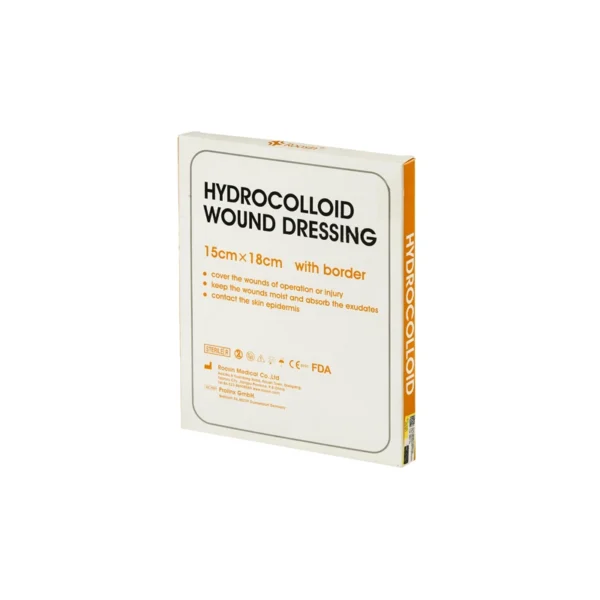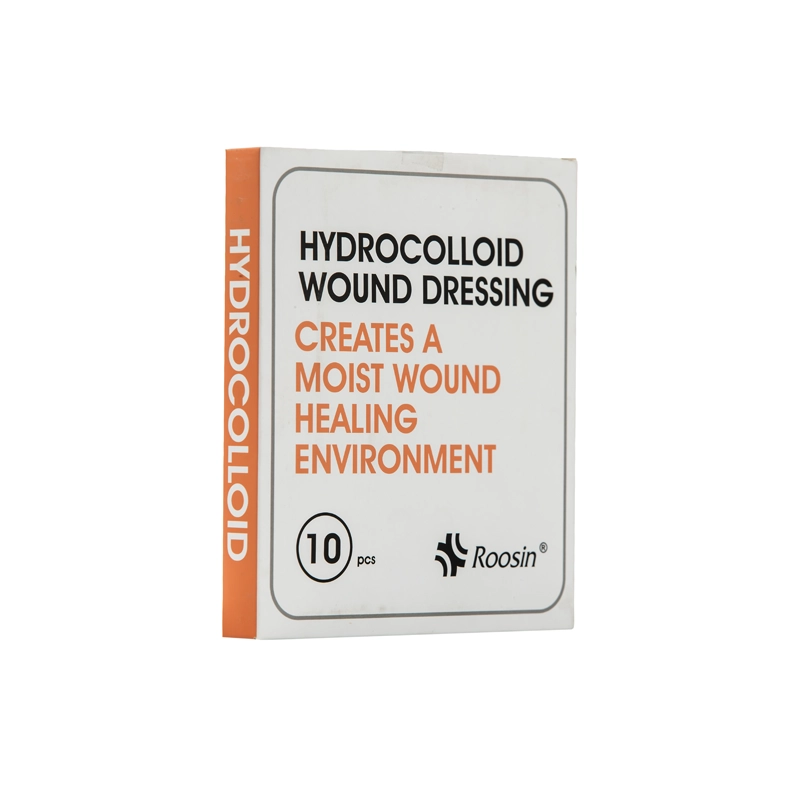
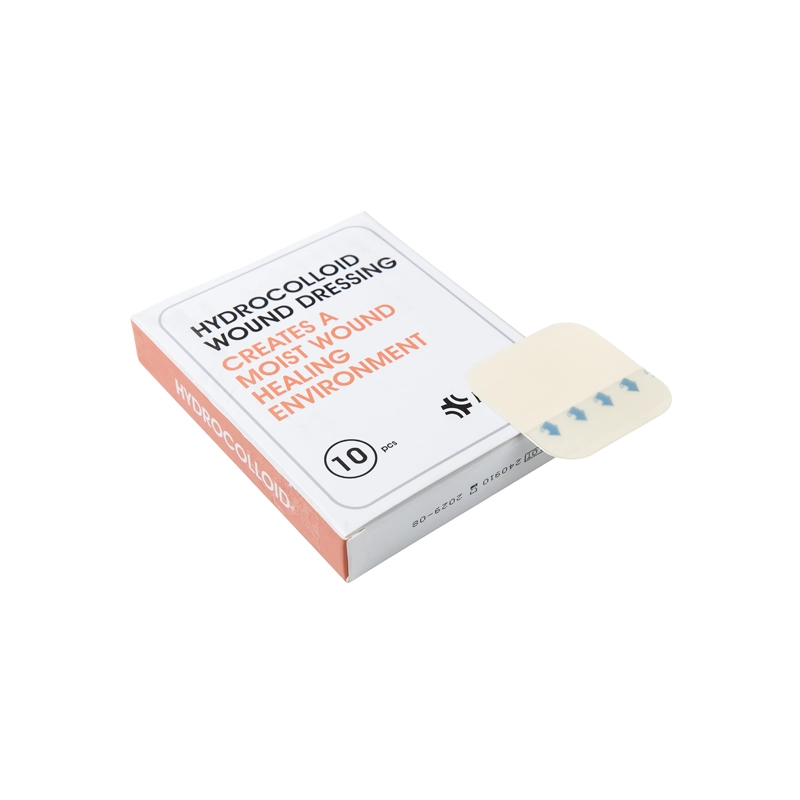
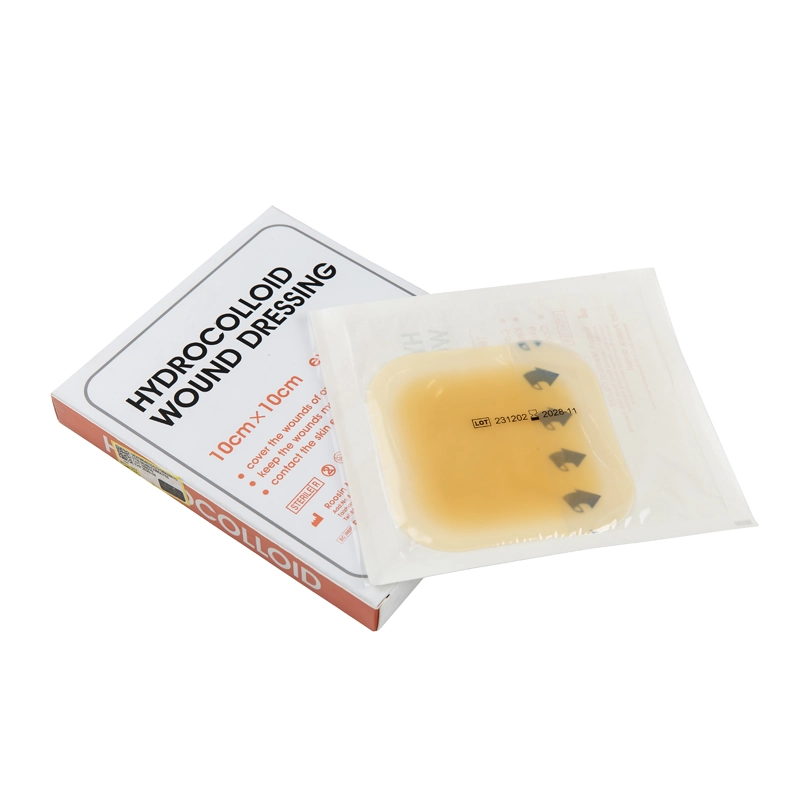
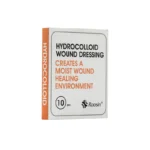
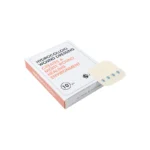
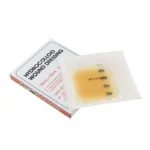
Thin hydrocolloid dressing
Thin Hydrocolloid DressingThe advanced thin hydrocolloid dressing is known as Extra thin hydrocolloid and comes in various sizes.
Hydrocolloid dressings are one of the most important types of advanced dressings and play an important role in treating and healing wounds. These dressings can be used as both primary and secondary dressings. Besides solving many of the problems of traditional dressing methods, hydrocolloid dressings have many advantages. They do not need frequent changes and are easy to use. They are also very suitable for areas of the body where wounds are hard to dress, such as elbows and heels.


| Country of Manufacture | China |
| Dressing Form | Sheet |
| Components | Special grade of polyurethane with Low friction coefficient& carboxymethyl cellulose |
| Main Feature | For use on low-exuding and dry wounds and bedsores. The dressing is not air-permeable, so it prevents bacterial exchange. |
| Suitable for Diabetic Wounds | Yes |
| Uses | Burns, dry and pressure wounds, wounds with very low or little exudate, and as a protective cover over other dressings; the dressing is completely uniform and can be used as a primary dressing |
| Contraindications | Wounds with severe bleeding, heavily exuding wounds, wounds that need air exchange, or infected wounds |
| Duration of Use | Change daily |
| Antibacterial | No |
| Can Be Cut | Yes |
Hydrocolloid dressings are made of two layers, an inner and an outer layer. The inner layer is a self-adhesive layer made of hydrophilic colloid particles such as carboxymethyl cellulose, pectin or gelatin. When hydrocolloid dressings come into contact with wound exudate, they absorb it and swell into a gel-like substance that provides a moist environment for wound healing. The outer layer, made of polyurethane and waterproof, protects the wound from external agents such as bacteria.
Hydrocolloid dressings are available in various types, such as thin hydrocolloid, alginate and others. The thin hydrocolloid dressing, known as Extra thin hydrocolloid, is used to manage and heal many types of wounds. These dressings have rounded corners that prevent the dressing from rolling during use. They also make it easy to monitor the wound’s healing without removing the dressing. The thin hydrocolloid dressing does not allow air exchange, so it prevents bacterial transfer. Wounds that hydrocolloid dressings are used for include low-exuding and dry wounds, bedsores, burns, pressure ulcers and wounds with very low or little exudate.
Roosin thin hydrocolloid dressings, whose inner layer is made of carboxymethyl cellulose and outer layer of polyurethane, are among the most reputable and best-known hydrocolloid dressings and are used to effectively treat many types of wounds. An important feature of this product is its affordability. Given fluctuations in medical equipment prices caused by rising exchange rates, we recommend that buyers contact our team before purchasing thin hydrocolloid dressings to learn the latest prices of this product.