
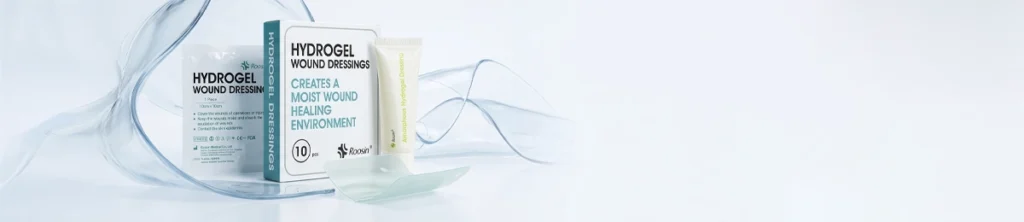
Hydrogel Dressing
Hydrogel dressings are one of the most important types of wound care dressings and are a good alternative to conventional dressings such as cotton and gauze. This type of dressing is also known as a hydrated polymer dressing. By providing a suitably moist environment for the wound, hydrogel dressings support healing and prevent infectious agents from entering the wound.
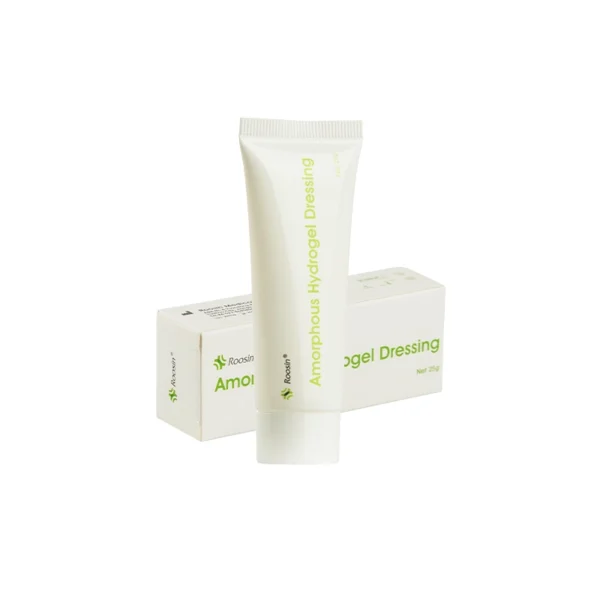
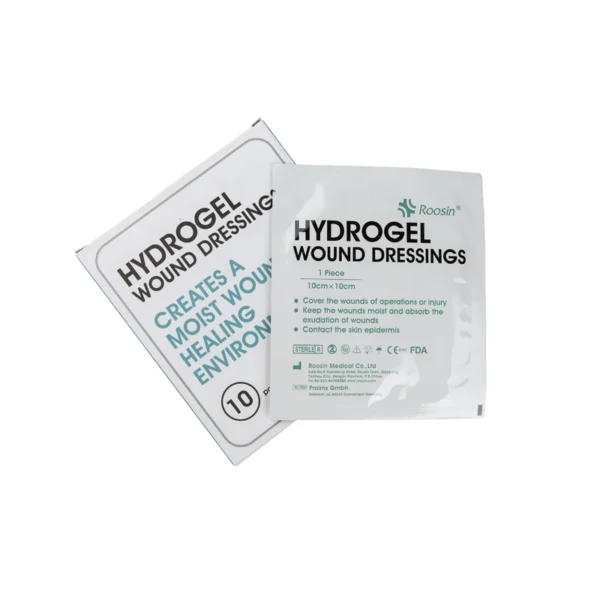
Hydrogel dressings are a family of products in wound management. As their name suggests, these dressings are designed to provide moisture for wound healing. Hydrogel dressings keep other fluids out of the wound (semi-occlusive wound dressings) while generally allowing oxygen and moisture exchange for the wound.
Structurally, more than ninety percent of hydrogels consist of insoluble hydrophilic polymers such as polymethacrylate and polyvinylpyrrolidone, which swell on contact with water. These dressings play an effective role in autolytic debridement (removing and breaking down dead tissue). Hydrogel dressings provide a moist environment for the migration and growth of repair cells and also absorb wound exudate.
Hydrogels are available as gel sheets and 25-gram gel tubes. The autolytic debridement of hydrogels does not damage new forming tissue (granulation tissue) or epithelial tissue. Hydrogels are used for a wide range of dry and low-exuding wounds and are very useful for breaking down slough on the wound surface.
They have a significant cooling and pain-relieving effect on painful wounds and burns. Hydrogels are in direct contact with the wound and are supported by secondary dressings such as foams and films. They are particularly effective for mildly exuding wounds, partial-thickness wounds, and dry wounds with infected slough.
Hydrogel dressings are among the most modern wound dressings and are made from materials such as agar, gelatin, pectin or carboxymethyl celluloses. They can be used for traumatic wounds, burns and bedsores. Thanks to their flexibility and fluidity, they can be used on different areas and come off easily and painlessly. Skin regeneration and remodeling occur faster with these hydrogels than with other dressings.
Hydrogel dressings consist of a network of hydrophilic polymers that swell on contact with water, absorb and hold a large amount of it, and turn into a gel. They provide good air permeability while breaking down necrotic tissue and cleansing the wound. They should usually be changed every two days on contact with the wound bed. Hydrogel sheets remain stable on the wound for up to 4 days.
Hydrogels provide the microenvironment needed to activate angiogenesis mechanisms in the wound, making it easier for fibroblasts to start the necessary growth and repair activities. In fact, their breakdown of dead tissue relies on the activity of the collagenase enzyme. Their cooling effect lasts up to 6 hours.
Hydrogels should not be used, or should be used with caution, in heavily exuding or infected wounds. They also need other dressings, especially when used as an amorphous gel, and can cause maceration of the skin around the wound and, if not covered, lose moisture and dry out.
The Most Important Types of Hydrogel Dressings
Hydrogel dressings come in 3 types: sheet, amorphous and impregnated:
Hydrogel sheet
This type of hydrogel consists of interlinked polymer molecules that can help provide wound moisture and cover the surface of various wounds as a sheet. The hydrogel sheet is backed by a semi-permeable polymer film, and its edges may be adhesive. The backing layer prevents moisture from evaporating and the wound from drying out. Sheets can be cut to any size and shape. Hydrogel sheet dressings can be used as primary and secondary dressings.
Amorphous hydrogel
Amorphous hydrogel is a primary dressing. Its gel can flow freely and enter wound cavities. Amorphous hydrogel dressings are usually covered with a gauze bandage to keep them in place. This type of dressing needs frequent changes.
Impregnated hydrogel
This dressing is made by spreading gel on a gauze strip, sponge or pad. It is usually suitable for deep wounds and needs a secondary dressing to hold it in place.
What Kinds of Wounds Are Hydrogel Dressings Used For?
Hydrogel dressings are suitable for the following wounds:
- Painful wounds
- Granulating wounds
- Wounds with slough or eschar
- Radiation skin damage
- Abrasions and partial-thickness burns
- Dry or slightly moist partial- and full-thickness wounds
The important point here is that hydrogel dressings are not suitable for full-thickness burns or wounds with moderate to heavy exudate.
Advantages of Hydrogel Dressings
Using hydrogel dressings has several benefits, the most important being:
They are cooling and soothing.
They help wound healing and epithelialization.
They can be used on infected wounds.
They hydrate eschar and non-viable tissue and improve debridement.
Disadvantages of Hydrogel Dressings
Alongside their advantages, hydrogel dressings have the following drawbacks:
- They need a secondary dressing.
- They may cause maceration.
- If not properly covered, they can dry out.
- They should not be used with alginate, foam or gelling fiber dressings.
What Should You Keep in Mind When Using Hydrogel Dressings?
Using and changing hydrogel dressings requires following these instructions:
1- Prevent the skin around the wound from getting wet.
2- When changing the dressing, clean the wound with normal saline.
3- Change the dressing every one to four days.
4- For radiation burns, it is best to keep the dressing in the refrigerator so it can be applied cold to soothe and reduce pain.