
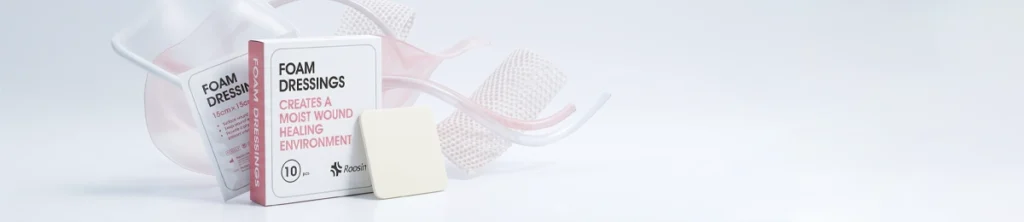
Foam dressing
Today, dressings have attracted special attention as a medical tool, used to protect injuries or wounds from bacteria and create a moist environment for healing. One type is the foam dressing, used as an effective tool for wound healing and for preventing injury when the dressing is removed. These dressings are lint-free and absorbent.
They also come in various thicknesses and have a non-adherent layer that allows them to be removed without harming the body. Some have an adhesive border and an antibacterial film cover. As mentioned, this dressing creates a moist environment for wound healing and also provides thermal insulation. They are made in various forms, such as pads, sheets and cavity cushions.
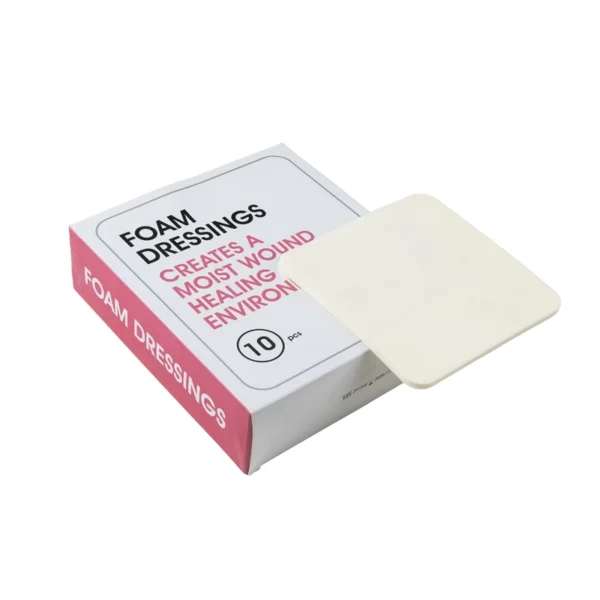
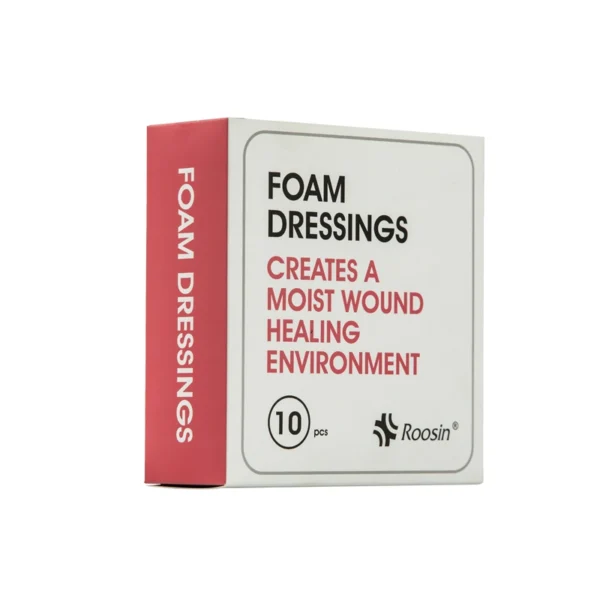

Structure and Features of Foam Dressings
This dressing is made of semi-permeable polyurethane containing foamed polymer solutions with open cells that retain fluid. These cells may be layered with other materials. Their absorbency varies with the thickness of the dressing. The contact surface is non-adherent and lint-free, which makes removal easier.
The outer layer is hydrophobic, or waterproof, and prevents bacteria and other contaminants from entering. Foam dressings are available with or without an adhesive border, and come in various sizes and shapes on the market. Some dressings include a bacterial barrier made of a transparent film. In addition, some contain an antibacterial agent such as silver, Manuka honey or antibiotics. A hydrophobic, water-repellent layer is usually fixed to the back of the foam to keep exudate from striking through.
An important feature of this dressing is its ability to create a moist environment for the wound. Other properties include protecting the wound and surrounding area from injury and providing thermal insulation; they are easy to apply and remove and do not cause injury on removal. This dressing is used in the presence of infection and with compression therapy. In addition, foam dressings are compatible with enzymatic debriding agents. How long they can be used depends on the amount of exudate; they can stay on for one to seven days.
Types of Foam Dressings
There are several types of this dressing, described in detail below:
Foam sheet
These dressings are sheets of polyurethane or silicone foam, with or without adhesive. Foam sheet dressings are very good at absorbing large amounts of exudate. They also protect the wound as a pad and are generally occlusive, so they do not need a secondary dressing. They usually stay on the wound for 2 to 3 days, which reduces cost and the need for frequent changes.
Polyurethane foam
The polyurethane foam dressing is a type of non-adherent foam dressing made of two layers:
1) highly absorbent hydrophilic polyurethane foam, and 2) a transparent polyurethane film that acts as a barrier against bacteria while allowing water vapor exchange. The polyurethane film is waterproof and adhesive on the back.
They are used for wounds with low to moderate exudate. Partial- to full-thickness wounds this dressing is used for include pressure ulcers, venous and arterial leg ulcers, diabetic foot ulcers, first- and second-degree burns, and surgical wounds. Its most important advantages include excellent absorption thanks to its open-cell structure, low friction, creating a moist environment and being cost-effective.
Silicone foam
The silicone foam dressing is made of polyurethane foam, a polyurethane film and a silicone film. The product is sterile and can separate the wound from the drained exudate, reducing the risk of infection. This dressing can provide a moist environment for wound healing and does not need frequent changes. Its most important features include high exudate absorption and fast wound healing.
Foam dressing with silicone gel
This dressing contains a hydrophilic polymer with a three-dimensional structure. It can quickly absorb large amounts of wound exudate and provide a moist environment that speeds up wound healing. The dressing also does not stick to the wound and soothes it. It can be used for a wide range of wounds such as pressure ulcers, leg ulcers, skin tears and surgical wounds. Its most important advantages include not sticking to the wound and painless removal, faster healing thanks to a moist environment, easy application and softness.
Island foam dressing
Island foam consists of four layers: a polyurethane tape, polyurethane foam as the main core of the dressing, a silicone film and a polyethylene film, and can be used to heal heavily exuding wounds. This dressing provides a moist environment for wound healing; its most important functions include protecting the wound from bacterial contamination, preventing maceration, absorbing exudate, not sticking to the wound, relieving the patient’s pain and preventing re-injury. Its most important advantages include high absorbency, a non-adherent core, protection against fluids and bacterial contamination, good moisturizing, softness and comfort, ease of use and low allergy risk.
Silver foam dressing
This dressing is non-adherent, sterile and highly absorbent. It has a soft texture, and its main job is to kill bacteria while providing a moist environment for the wound. When the wound has a lot of draining exudate, this dressing can absorb it. Its most important advantages include being non-adherent, effectiveness against a wide range of bacteria, preventing bacteria from entering the wound and causing infection, and providing a moist environment.
In this moist environment, several growth factors are released that are beneficial for wound healing, including stimulating cell proliferation and helping keep cells alive. It also increases fibroblast growth factor in wound exudate, epidermal growth factor and platelet-derived growth factor, which are more active in a moist environment than a dry one. This exudate also increases the growth of cultured fibroblasts, keratinocytes and endothelial cells. Other advantages of a moist environment include faster migration of skin cells and healing of wounds that have not been cleaned in a moist environment, which is beneficial for epidermal cell migration and wound healing.
How to Use Foam Dressings
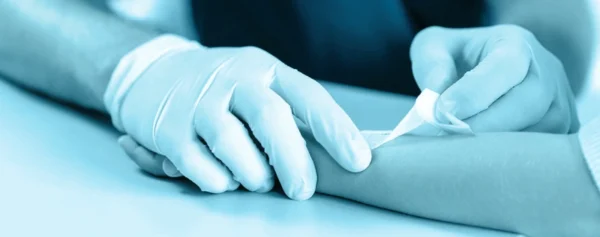
To use this dressing, it is best to follow these steps:
- First, put on gloves.
- Clean the wound site with saline. Then dry the skin around the wound with sterile gauze.
- Take a dressing sized so that it extends one inch beyond the wound edges and covers it completely.
- If the dressing has no adhesive border, use a secondary dressing or secure it in place with tape.
- When changing the dressing, remove it carefully, clean the wound site and place the new dressing on the wound.
Uses of Foam Dressings
Foam dressings are used as both primary and secondary dressings and are suitable for wounds with moderate to heavy exudate. Both shallow and deep wounds benefit from this dressing. Wounds foam dressings are used for include leg ulcers, surgical site wounds, skin grafts, minor burns, abrasions, infected wounds, lacerations, draining peristomal wounds, pressure ulcers, wounds requiring negative pressure wound therapy (NPWT), tracheostomy and gastrostomy tubes, and wound cavities.
In general, besides providing thermal insulation, foam dressings are used most for absorbing and managing wound exudate. They can also be used for wounds with soft necrotic tissue. One of their features is flexibility, so they can be used on specific parts of the body such as toes, fingers or ears. A very important property of this dressing is its insulating effect, which is used to keep wounds that need insulation warm. This dressing is also suitable for protecting the skin over bony prominences or areas with a lot of friction on the skin.
Contraindications for Foam Dressings
This dressing is not suitable for non-draining wounds and third-degree burns. Without exudate, the wound bed becomes a completely dry environment for healing (although in such cases the dressing can be used to keep the eschar dry and protect it from being pulled off suddenly).
Excessive exudate can be an obstacle to using the dressing, because it makes the dressing wet and lets external bacteria into the wound. Excessive exudate may also require frequent dressing changes and wet the area around the wound. In such cases, a more absorbent foam or another type of dressing is recommended.
Advantages of Foam Dressings
- Non-adherent
- Easy to use
- Can absorb pressure on the wound
- Absorbs low to high amounts of exudate
Disadvantages of Foam Dressings
- Not suitable for low-exuding and dry wounds
- When saturated, it may macerate the surrounding skin
- May need a secondary dressing such as gauze and transparent tape
Foam Dressing Representative
Roosin Medical, founded in 1996 in China, is a leading company in developing, manufacturing and selling wound dressing products to national and international standards. The company covers about 10,000 square meters. One of its great achievements is being recognized as a Jiangsu high-tech enterprise. Over many years of rapid growth, Roosin has not only gained experience in new product development, manufacturing and management, but has also built a strong team of research and sales staff, with about 120 employees. The company currently holds ISO 13485, FDA and CE certifications and has about 66 patents in wound dressings. Bonyan Tajar is proud to be Roosin’s representative and to have built an outstanding record in selling wound dressing products.