Treating Diabetic Foot Ulcers with Advanced, Modern Dressings
In the past, gauze, bandages and ointment were used to heal diabetic wounds, but this traditional method had drawbacks. One problem is that it is not cost-effective, because the dressing needs frequent changes. Also, gauze sticks to the wound and leaves residue on the wound when removed.
To solve these problems, advanced dressings and modern dressings for diabetic wounds were introduced to the market, which not only overcome the drawbacks of the traditional method but also offer many benefits. However, these methods alone cannot fully resolve the additional challenges of diabetic wounds, so more complex interventions are needed for more successful treatment.
The Most Important Types of Diabetic Foot Ulcer Dressings
The dressing used to treat diabetic wounds is one of the advanced, modern dressings, with features such as being sterile, providing a moist environment for wound healing, thermal insulation, a fair price, air permeability, reducing wound infection, not sticking to the wound, easy changing, effective removal of wound exudate, allowing the wound to be seen, and leaving no residue on the wound.
Because diabetic foot ulcers differ, the type of dressing used for them also differs. Today, many types of modern diabetic wound dressings are available on the market, the most important being hydrocolloid, hydrogel, foam, alginate and silver alginate dressings. These dressings have all the features described above.
How to Dress a Diabetic Foot Ulcer
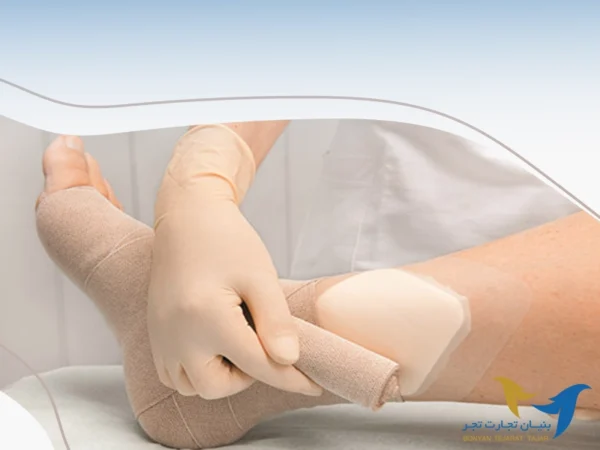
Dressing a diabetic wound is simple and easy. First, clean your hands thoroughly. Then clean the wound with water or a diabetic foot ulcer wound-cleansing solution and dry it. Finally, apply the dressing. If needed, you can apply a diabetic foot ulcer ointment to the wound. But what is the best ointment for treating diabetic foot ulcers? We cover this below.
Types of Ointment for Treating Diabetic Foot Ulcers
Topical ointments come in various forms, which is one of the factors affecting the price of diabetic wound ointment. Clotrimazole, silver sulfadiazine, metronidazole and bacitracin zinc are among the most effective and best ointments for diabetic foot ulcers. They must be used only after consulting a specialist doctor and wound care practitioners and examining the wound.
Diabetic Wound Adhesive
So far in this article, we have discussed modern diabetic foot ulcer dressings as a useful, practical tool for treating wounds on the feet of people with diabetes. Advances in medical science in recent years have introduced new methods for treating diabetic wounds, one being a new wound adhesive that can help heal diabetic wounds and speed up their recovery. This adhesive is made from a protein called laminin. Because this protein is inexpensive, the new diabetic wound adhesive is expected to be affordable.
How to Treat a Diabetic Wound at Home
Patients should note that wounds in people with diabetes usually behave in complex ways and take longer to heal than other wounds. Therefore, if diabetic wound treatment is to be done at home, it must follow the supervision and specialist instructions of doctors and wound care practitioners, so that observations at the wound site are managed with the most accurate treatment protocol.
Price and Purchase of Diabetic Wound Dressings
Many suppliers sell diabetic foot dressings. One point to consider before buying this medical product is its quality. Low-quality dressings not only disrupt the healing of diabetic wounds but also cause complications such as infection.
Bonyan Tajar is one of the main suppliers of diabetic wound dressings in Iran and imports and sells this product from reputable, well-known global companies such as Roosin Medical. Roosin diabetic dressings are made to national and international standards, are of outstanding quality and can ensure the safety of users. Besides very high quality, they are affordable.
Given fluctuations in diabetic wound dressing prices due to major exchange rate changes, we recommend contacting our experts before buying this product for free advice and to learn the price of diabetic wound dressings.
Advanced Dressings: An Effective Tool for Treating Diabetic Wounds
With foot ulcers becoming common in people with diabetes, finding a way to solve this problem has become more important than ever. As mentioned, modern diabetic wound dressings, with their unique features, have raised hopes of solving this problem. These dressings, an ideal option for treating diabetic foot ulcers at home, are made in various types and are readily available.
Finally, you can get answers to your questions on this topic from our experts. They are also happy to receive your comments and suggestions through the comments section.



Leave a Reply