
Debridement is a process for removing dead (necrotic) tissue and infected skin tissue. This method greatly helps wound healing and is suitable for removing foreign material from tissue. Wounds that do not heal can be treated with debridement. By removing unhealthy tissue, the wound can restart the healing process.
What Is Wound Debridement?
Simply put, debridement is the process of removing any dead or necrotic tissue and foreign material from a wound. This method has benefits. One advantage of wound debridement is reducing wound infection and helping it heal. The technique also greatly helps new, healthy tissue form and considerably reduces scar size.
Which Wounds Is Debridement Suitable For?
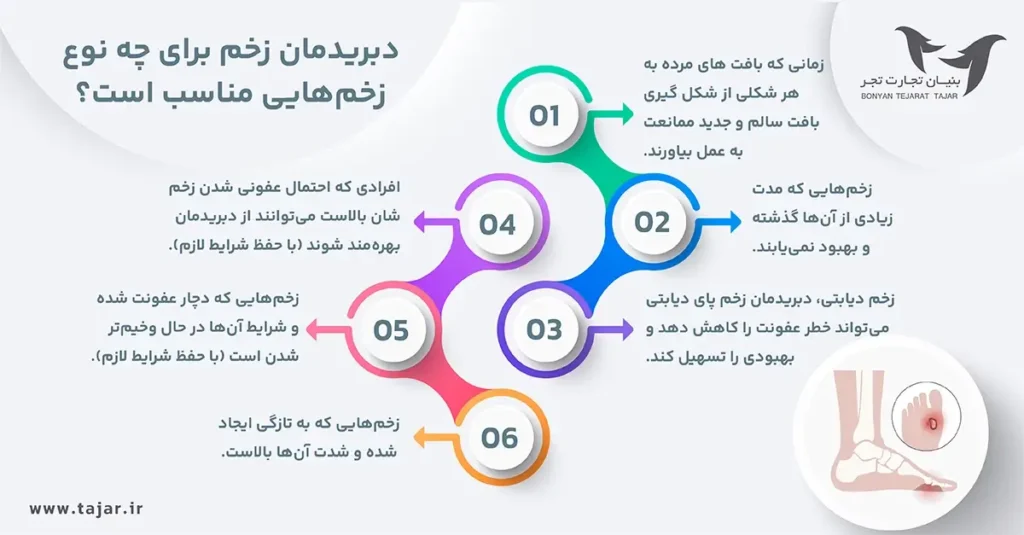
Debridement cannot be used for all types of wounds. Wounds that can be treated with this technique include:
- Recent wounds that are severe.
- Wounds that have been present for a long time and are not healing.
- Wounds that have become infected and are getting worse (given the necessary conditions).
- People at high risk of wound infection can benefit from debridement (given the necessary conditions).
- Diabetic wounds. Debridement Diabetic foot ulcers can reduce the risk of infection and help healing.
- When dead tissue in any way prevents healthy new tissue from forming.
The Most Common Wound Debridement Methods
Choosing the best wound debridement method requires considering factors such as the type of wound, the patient’s age and health, and the risks of wound complications. Many methods are available today; 6 of the most important types of wound debridement are described below:
Biological debridement (biosurgery)
This type of debridement, also known as larval therapy (maggot therapy), uses maggots, the larvae of a type of green bottle fly, to remove old tissue and heal the wound. Besides necrotic tissue, maggots also play an important role in controlling wound infection by secreting antibacterial substances and eating harmful bacteria.
In biological debridement, the larvae are placed directly on the wound or inside a mesh bag and held in place with a dressing. The larvae stay in place for 1 to 3 days and are replaced twice a week.
Debridement with larvae can be used for large wounds. The technique is also very suitable for wounds infected with some antibiotic-resistant bacteria such as Staphylococcus aureus. Wounds that cannot be operated on for medical reasons can be treated with biosurgery.
Enzymatic (chemical) debridement
In this type of debridement, an ointment or gel is used to soften the tissue. The drugs used in chemical debridement contain enzymes of animal, plant or bacterial origin. They should be applied to the wound once or twice a day and covered with a dressing. The dressing must be changed regularly.
Unlike biological debridement, the enzymatic method is not suitable for large wounds or heavily infected wounds. It is recommended where there is bleeding or where the risk of surgical complications is high.
Autolytic debridement
As mentioned in the previous section, enzymatic debridement uses synthetic enzymes. In the autolytic technique, however, the body’s natural enzymes and fluids soften unhealthy tissue. In this type of debridement, a moisture-retaining dressing is applied to the wound. A moist dressing is used because the unhealthy tissue absorbs the moisture, swells and separates from the wound.
Autolytic debridement is most effective in healing pressure ulcers (bedsores) and non-infected wounds. This method is also recommended for infected wounds as well.
Mechanical debridement
The most common type of wound debridement, which can be used for infected and non-infected wounds. This method applies a mechanical force to remove unhealthy tissue. There are three types of mechanical debridement:
- Monofilament debridement pads: These are soft and made of polyester. Placing them on the wound removes unhealthy tissue and wound debris.
- Hydrotherapy (water therapy): In hydrotherapy, unhealthy tissue is washed away with running water, which requires medical equipment (such as a syringe or catheter tube), a whirlpool bath or a shower.
- Wet-to-dry dressings: these dressings are applied to the wound while moist. They then dry and stick to the wound, so removing them easily takes the unhealthy tissue with them.
Sharp or surgical debridement
This type of debridement involves cutting away unhealthy tissue with a sharp instrument such as scissors, a scalpel or a curette. The cut must be made so as not to damage the tissue around the wound. Sharp debridement is used in surgery. Large and deep wounds can also be treated with this technique. The important point is that surgical debridement is used when other debridement methods have not been effective in healing the wound or the patient needs rapid, emergency treatment.
Dental debridement
This technique, also known as full-mouth debridement, is used in dentistry to remove tartar and plaque from the teeth. As mentioned, dental debridement is only used in dentistry and, unlike the methods above that remove dead and unhealthy tissue from wounds, does not remove any tissue.
Steps of Wound Debridement
The first step in debridement is preparing the wound, which depends on several factors, including the wound’s condition and the person’s health. During preparation, the patient’s physical condition is examined and the size of the wound is determined. If needed, pain medication or local or general anesthesia is used.
If you are having sharp debridement and need general anesthesia, you should arrange a way to get home. You will also need to fast for a set period before surgery. Non-surgical debridement is done by a medical specialist in the clinic or the patient’s room and is usually repeated for 2 to 6 weeks or more until the wound fully heals.
What Should You Keep in Mind After Wound Debridement?
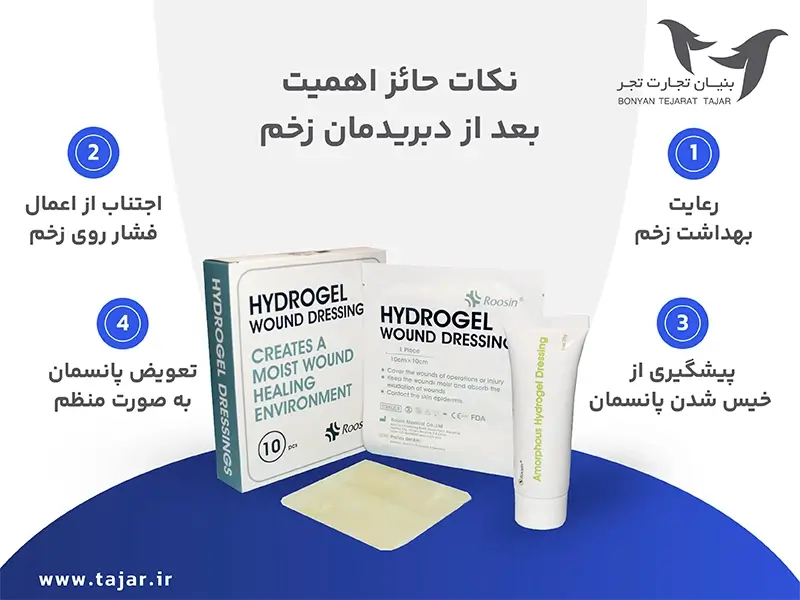
Wound care Following the points below can help the wound heal as quickly as possible and reduce complications:
- The dressing should be changed regularly.
- Keep the dressing from getting wet. Check with your doctor about bathing. Avoid places such as swimming pools as much as possible.
- Do not put pressure on the wound. If the wound is on your foot, use crutches. You can also use special cushions to take your weight off the wound.
- The wound should always be clean. If you need to touch the wound, wash and clean your hands before and after.
How Long Does Recovery Take After Surgical Debridement?
Full recovery after surgical debridement depends on factors such as the severity, size and location of the wound, and usually takes 6 to 12 weeks. Return to work only with your doctor’s approval. If your job is physically demanding or involves the injured area, be sure to tell your doctor. You should also:
- Eat healthy food. Your body needs nutrients to heal.
- Avoid smoking. Smoking makes it harder for nutrients and oxygen to reach the wound, which slows healing.
- See your doctor regularly. Your doctor should check your wound to make sure it is healing properly.
Complications of Wound Debridement
Despite its benefits, wound debridement can have problems. Irritation, bleeding, damage to healthy tissue, allergic reactions, pain and infection are the most important complications of this technique. If you have any of the following symptoms, see a doctor, as they indicate wound infection: redness, fever and chills, bad odor, excessive bleeding, increasing pain, new discharge, nausea and vomiting.
It is worth noting that although wound debridement can have complications, its benefits often outweigh its risks. Many wounds do not heal without debridement.
Debridement: An Effective Technique for Wound Healing
In this article, we discussed wound debridement as an effective way to heal wounds. Sometimes a wound does not heal and needs debridement. With this technique, unhealthy and necrotic tissue can be removed from the wound to help it heal.
Debridement can be done with larval therapy, specialized dressings, or ointments or gels that soften tissue. Unhealthy tissue can also be removed by applying a mechanical force such as running water.
The wound’s condition is the most important factor in choosing the best type of debridement. Usually, several methods are used together. Following wound care tips, eating well, not smoking and seeing a doctor regularly greatly help wound healing. If you notice any signs such as increasing pain or swelling during recovery, see your doctor.

Leave a Reply