The Biopsy Needle and What You Should Know About It
Before we start, let’s look at what a biopsy needle is.
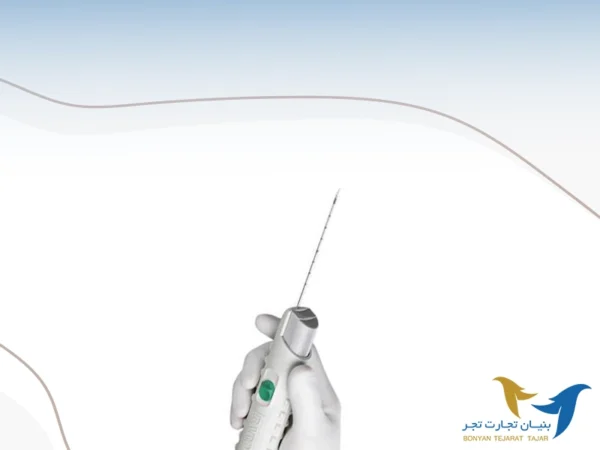
A biopsy needle is a needle inserted through the skin into body tissue to take a sample of cells for diagnosing disease.
This needle is used in needle biopsy. This method is mainly used for suspicious areas of the body that are easy to locate, such as breast lumps and enlarged lymph nodes. Needle biopsy has various uses and types, which are covered below.
Needle Biopsy: A Method for Diagnosing Cancer
Interestingly, imaging methods such as CT scans and MRI can only show the location of abnormal masses and tissues in the body and cannot distinguish cancerous cells from non-cancerous ones. The biopsy needle is a useful tool for diagnosing cancer and other diseases. Three of the most important uses of the biopsy needle are listed below.
- Analyzing abnormal masses: A biopsy needle can help determine whether a mass is a cancerous tumor, a cyst or an infection.
- Infection: This tool can be used to analyze the microbes that cause infections. This helps doctors prescribe the most effective drugs to treat the infection.
- Inflammation: Needle biopsy can show what is causing inflammation and which types of cells are involved.
Types of Biopsy and Biopsy Needles
As mentioned, needle biopsy is one of the important and widely used types of biopsy, and it has several variations. Five types of biopsy are explained below.
Needle biopsy
In this technique, a needle is used to take a sample of cells from a suspicious area of the body to diagnose disease. Needle biopsy is done in 4 ways:
Fine-needle aspiration
In this method, a thin, long needle is inserted into the suspicious area and, with a syringe, the fluid or cells needed for analysis are sampled.
Core needle biopsy
This technique uses a large needle with a cutting tip to remove part of the tissue from the suspicious area.
Vacuum-assisted biopsy
This method is similar to fine-needle aspiration, except that a vacuum device is used during sampling. The advantage of this device is that more fluid and cells can be extracted for sampling, which reduces the time needed for sampling.
Image-guided biopsy
In this method, needle biopsy is combined with an imaging method such as CT, ultrasound or MRI. One advantage of image-guided biopsy is that it can reach suspicious areas that cannot be accessed through the skin, such as the liver, lungs or prostate.
Endoscopic biopsy
In this type of biopsy, a thin, flexible tube called an endoscope is inserted into the body through the mouth, rectum, urinary tract or a small incision in the skin. Then, with instruments passed through the endoscope, a tissue sample is taken from the suspicious area.
Depending on the area, endoscopic biopsy methods differ; examples include cystoscopy (sampling bladder tissue), bronchoscopy (sampling lung tissue) and colonoscopy (sampling large intestine tissue).
Skin biopsy
In a skin biopsy, diseases such as melanoma and some cancers can be diagnosed by taking a sample of skin.
This type of biopsy is done in 4 ways:
- Shave biopsy: In this type of biopsy, tools similar to a barber’s razor are used to scrape the surface of the skin.
- Punch biopsy: In a punch biopsy, a sample is taken from deeper layers of the skin using a circular tool.
- Incisional biopsy: In this method, part of the skin is removed as a sample to diagnose disease. The sample is taken with a scalpel. Depending on how much skin is removed, the biopsy site may need stitches.
- Excisional biopsy (removal): In an excisional biopsy, the entire mass or area of skin that may be diseased is removed. Like an incisional biopsy, this method may require stitches.
Bone marrow biopsy
Bone marrow biopsy is an ideal option for diagnosing cancerous blood diseases (such as leukemia, lymphoma and multiple myeloma) or non-cancerous ones. In this type of biopsy, a long needle is used to take a sample of bone marrow from the patient’s pelvis or, in special cases, from other bones. A local anesthetic is used to reduce pain during a bone marrow biopsy.
Surgical biopsy
Sometimes the cells needed for analysis cannot be reached with the biopsy methods described above. In this case, a surgical biopsy is used. In this method, the surgeon makes an incision in the patient’s skin to reach the suspicious area and removes some or all of the cells as a sample.
Surgical biopsy methods include surgery to sample a breast lump to diagnose breast cancer and surgery to sample lymph nodes to diagnose lymphoma. In this type of biopsy, the area may be numbed or, in some cases, the patient may be put under general anesthesia.
Needle Biopsy and Its Possible Complications
Alongside its benefits, needle biopsy can have complications, such as bleeding, infection and pain at the needle entry site. If you experience symptoms such as fever, pain at the biopsy site, swelling, drainage from the biopsy site, or bleeding that does not stop with pressure or a bandage, contact your doctor.
Automatic vs. Semi-Automatic Biopsy Needles
Biopsy needles come in two models: automatic and semi-automatic. The most important difference between them is how they work. As the name suggests, the automatic biopsy needle works without physical force, at the press of a button. The semi-automatic type, by contrast, requires a user to apply physical force.
Automatic and semi-automatic biopsy needles each have their own features. The most important features of the automatic needle are that it is easy and quick to use (short procedure time) and can be used for hard-to-reach areas. The semi-automatic needle, on the other hand, allows multiple samples and gives high control during sampling.
Biopsy needles come in various sizes such as 14, 16, 18 and 20 gauge, and the size is chosen based on the size of the lesion and the patient’s anatomy.
Biopsy Needle Price
So far in this article, we have fully explained the biopsy needle. One thing that may confuse you when buying a biopsy needle is choosing a brand. Although many brands of this product are available, they are not all of the same quality.
Among them, the Chiba biopsy needle has become one of the world’s well-known brands thanks to features such as a wide range of sizes, outstanding quality, ultrasound guidance for precise needle placement at the biopsy site, depth markings that show how far the needle has been inserted, an affordable price, and availability in both automatic and semi-automatic versions.
If you plan to buy this product, we suggest contacting our experts at Bonyan Tajar to find out the latest biopsy needle prices.
The Biopsy Needle and Its Role in Diagnosing Specific Diseases
In another article in our news magazine, we covered the types and uses of biopsy needles. As we said, medical imaging cannot be used to diagnose specific diseases such as cancer, and needle biopsy is an ideal solution to this problem. We then discussed the differences between the two biopsy needle models, automatic and semi-automatic, and their features, and found that the needle model and size are chosen based on factors such as the patient’s physical characteristics and the type of lesion.
Finally, one feature we offer our readers is the ability to ask questions through the comments section. You can also share your comments and suggestions with us there.
References
https://www.mayoclinic.org/diseases-conditions/cancer/in-depth/biopsy/art-20043922
https://www.mayoclinic.org/tests-procedures/needle-biopsy/about/pac-20394749
https://www.cliniciansbrief.com/article/ultrasound-guided-biopsy-liver


Leave a Reply